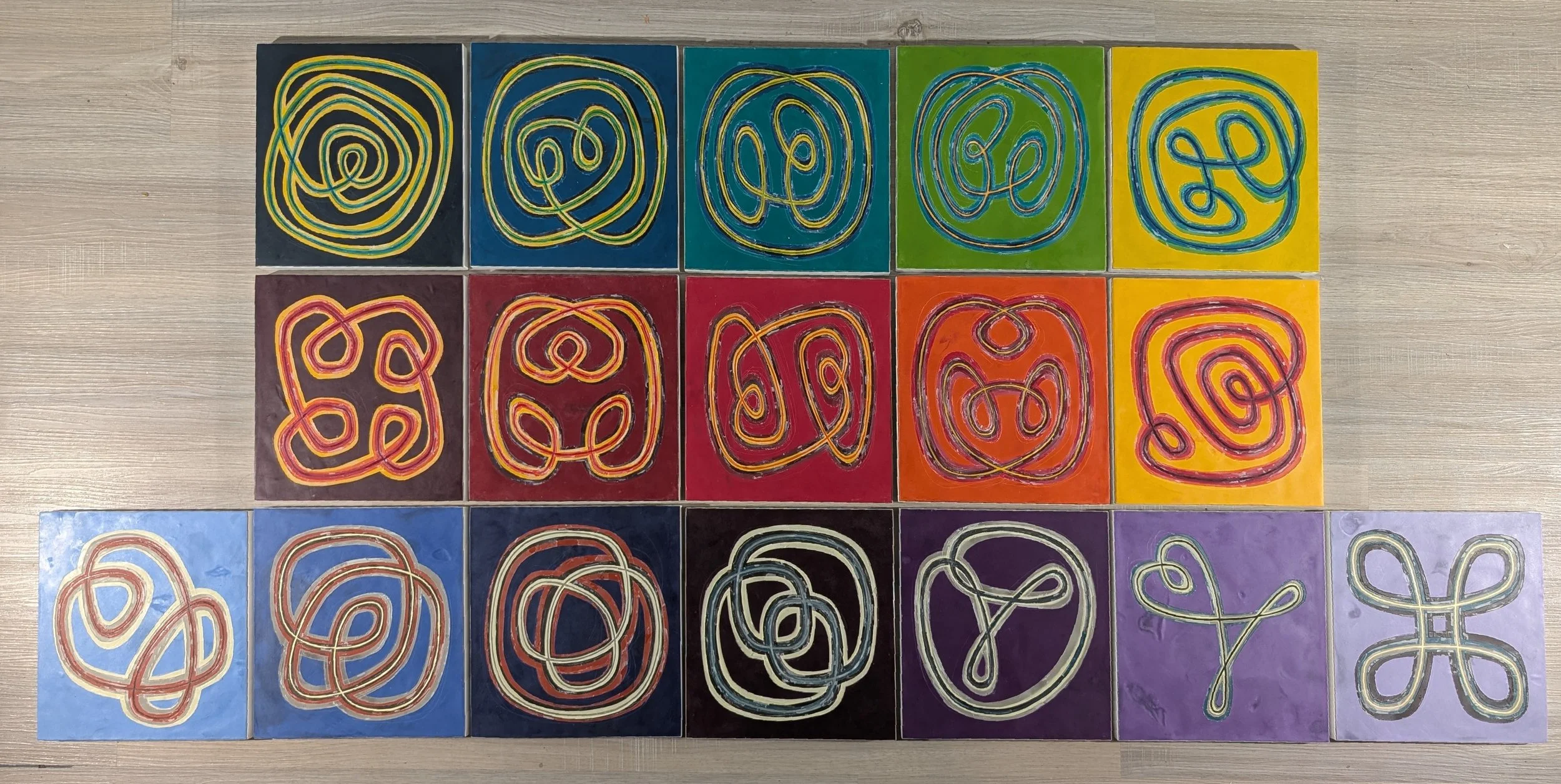
Primitives
The simplest planar geometries proceed from a point to a line, to an arc, to a spiral, to a circle, to a circle immersion with monotonal curves and simple traversal intersections. Things go on from there, but these simple circle immersions have been the main preoccupation of my studio practice for some time now. The “Primitives” series documents the features and characteristics that emerge as these forms become incrementally more complex.
I’m engaged in something more akin to natural history than personal expression. Although, as to that, I am quite taken by how the simplicity and purity of the geometric idea juxtaposes with the flawed and fragile, crawling, scrabbled, surgical rendering of that idea, by hand and through iterative dead reckoning, in physical material. For this series, the material for each one is a handcrafted cardstock/encaustic laminate on a 10"x10” birch panel, and the forms are revealed by cutting through and peeling away one layer at a time.
This set includes permutations with distinct isotopy for the circle itself, along with first and second generation circle immersions, each in a configuration that approaches peak symmetry.
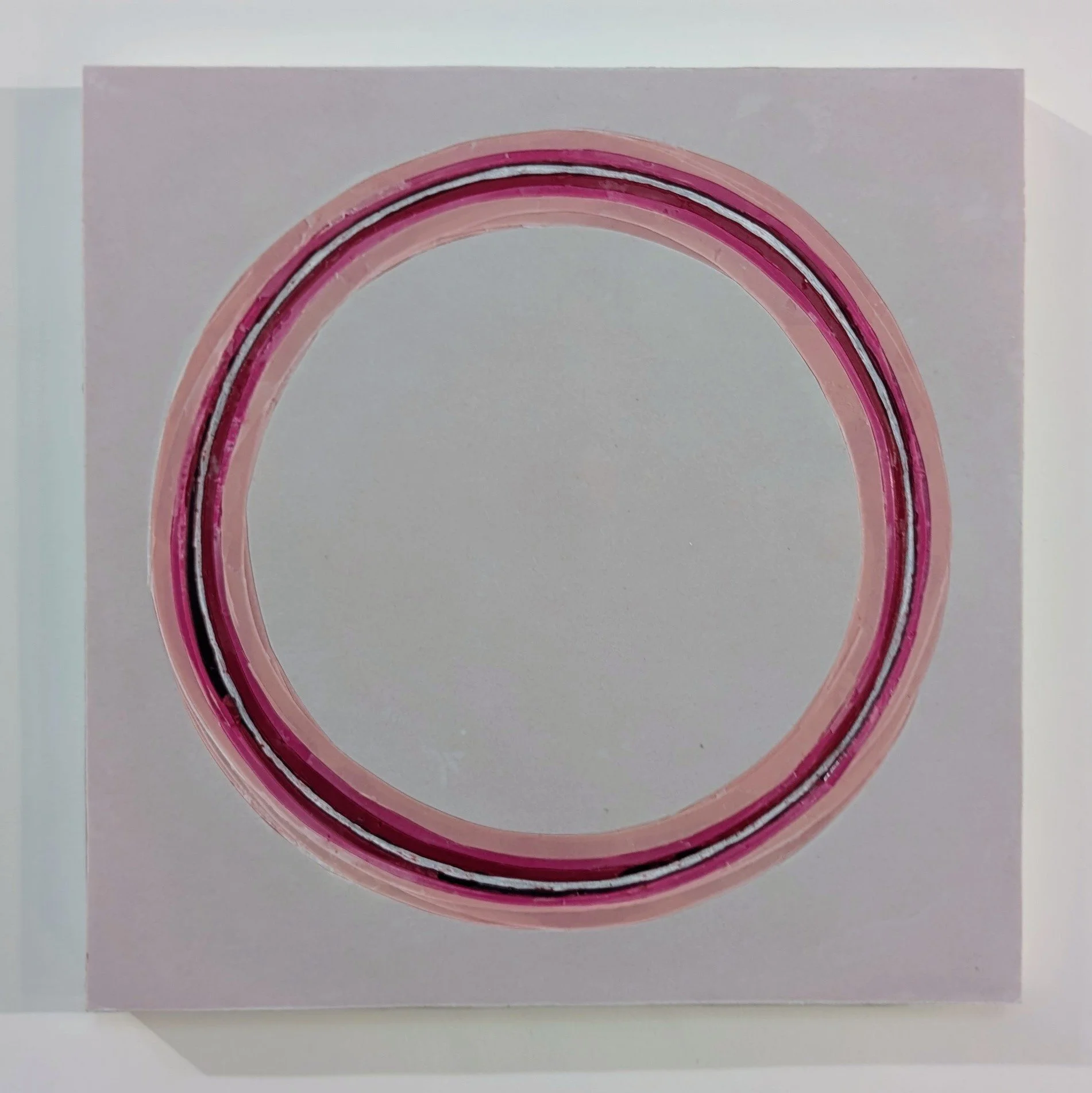
0-1 circle
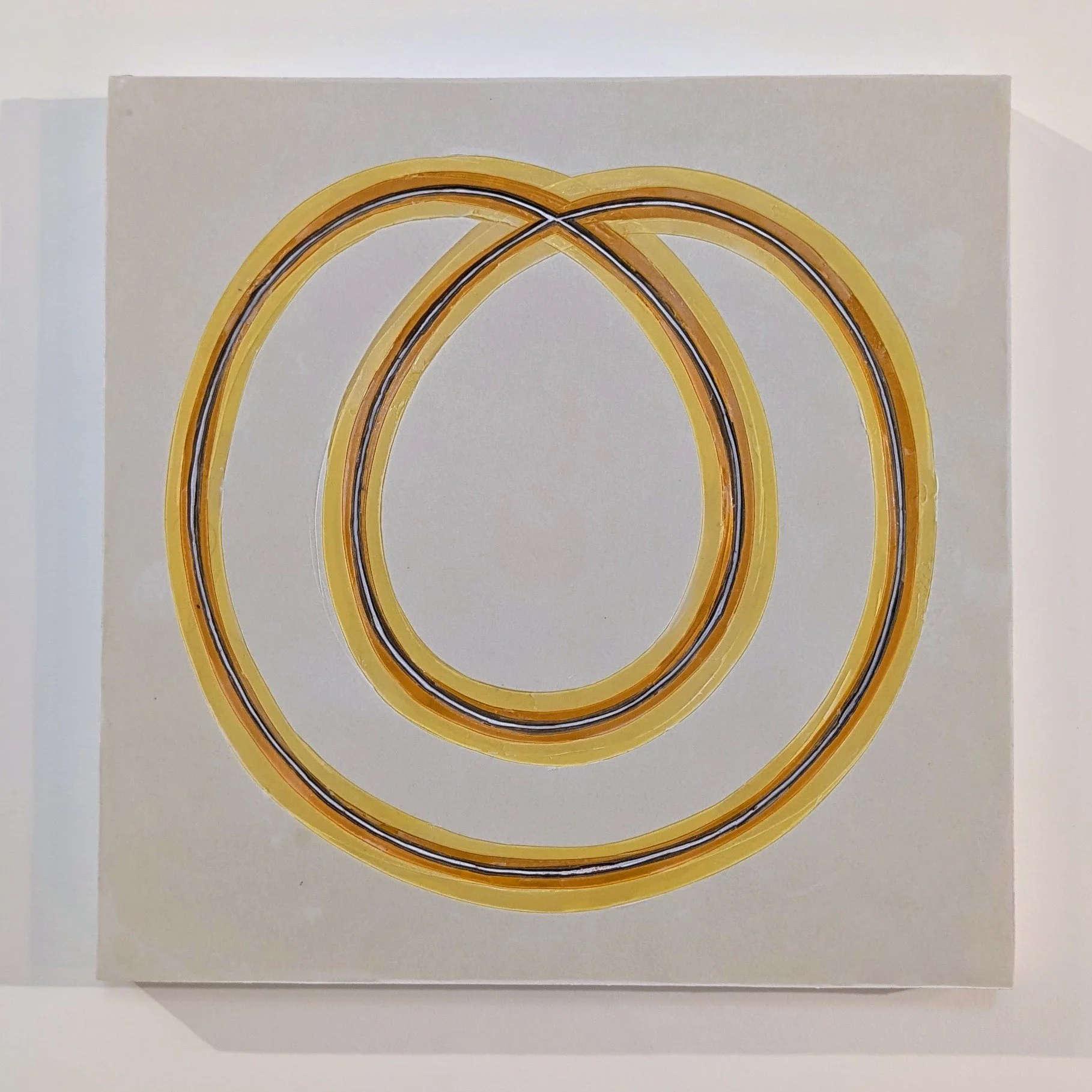
1-1 one nesting level containing one loop (1)
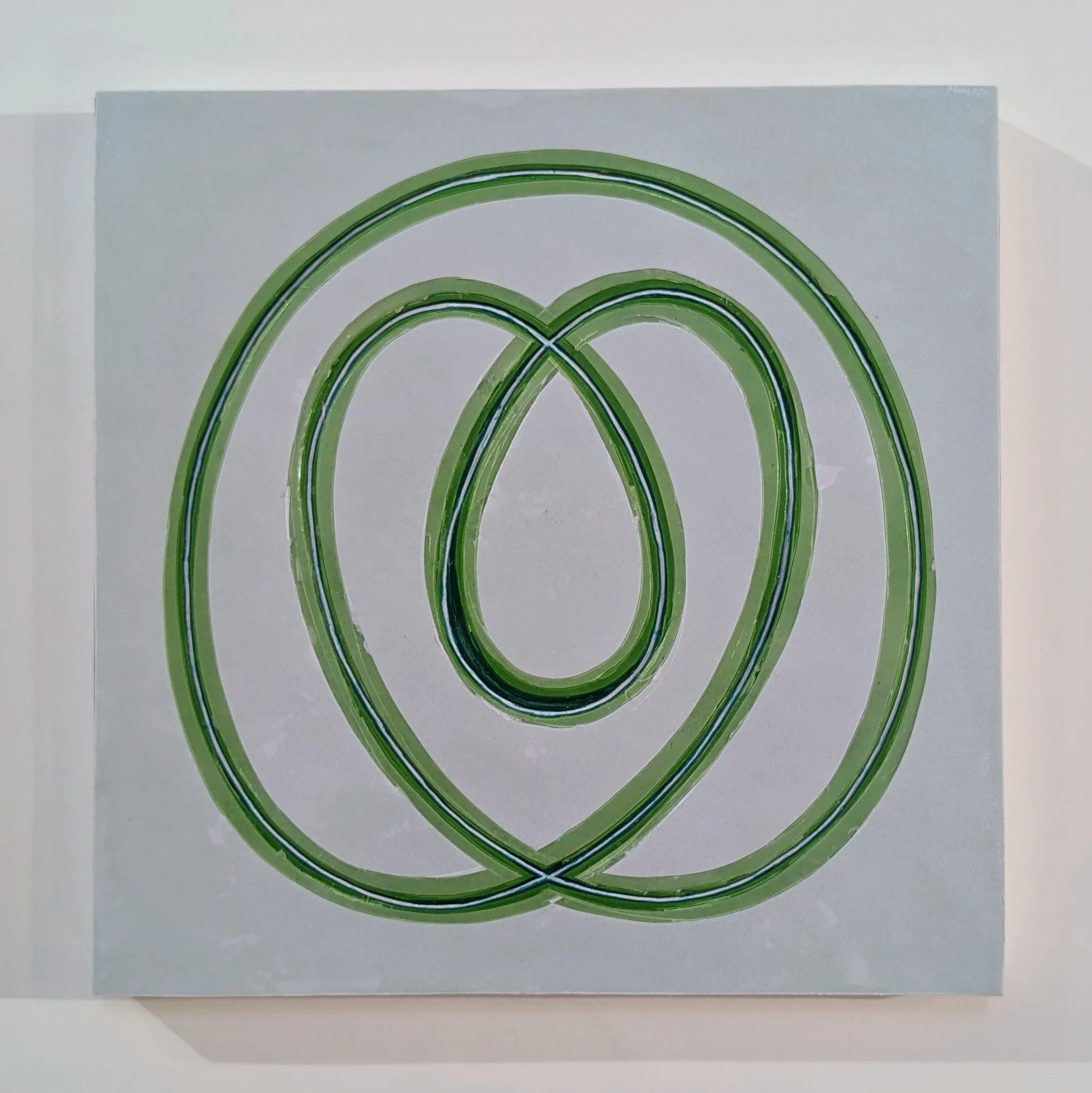
2-1 two nesting levels with one loop each (1,1)
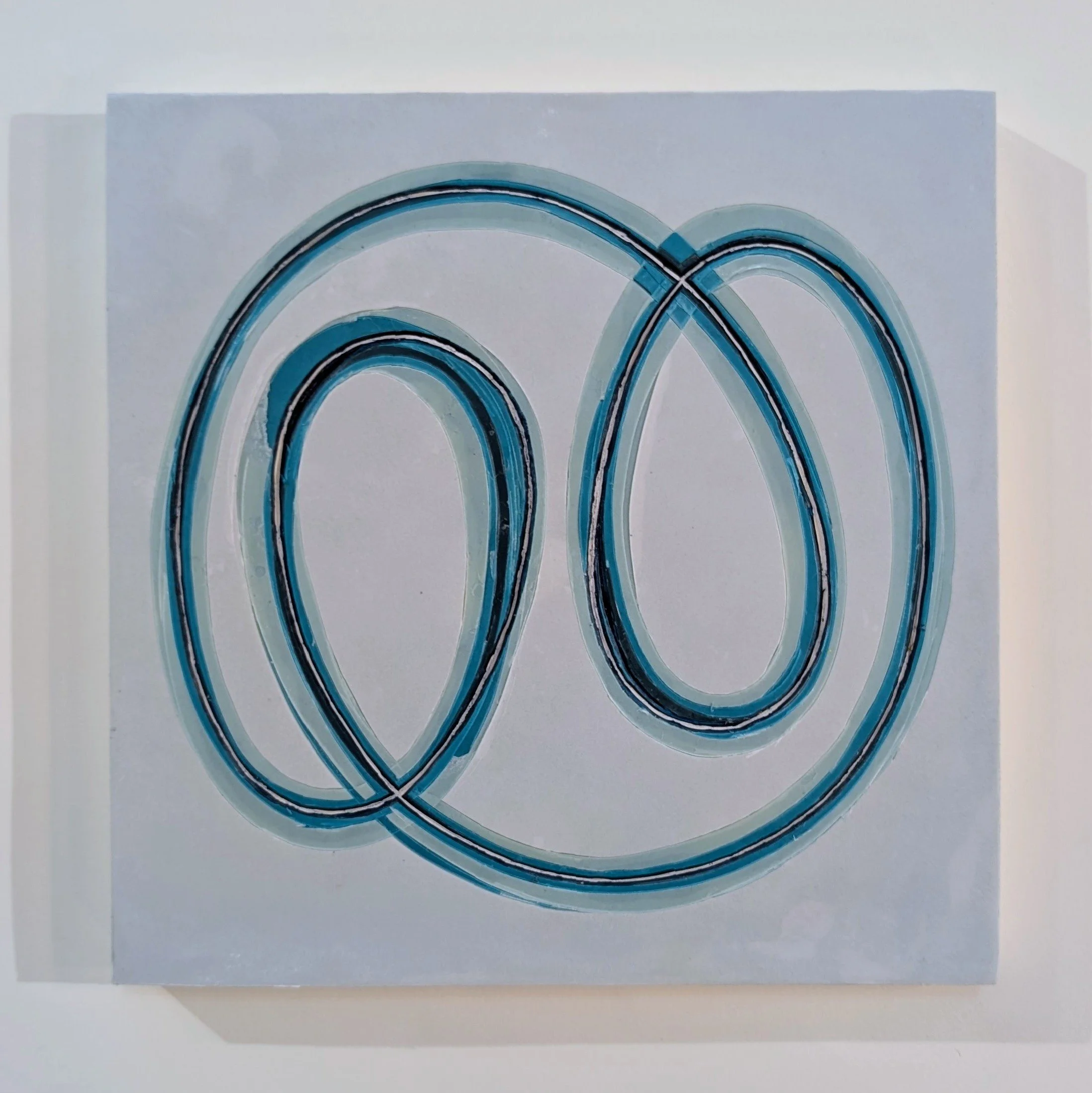
2-2 one nesting level with two loops (2,0)
With each additional intersection, the number of permutations with distinct isotopy grows dramatically, in a way that I haven’t quite figured out how to predict algorithmically, but I’m working on it.
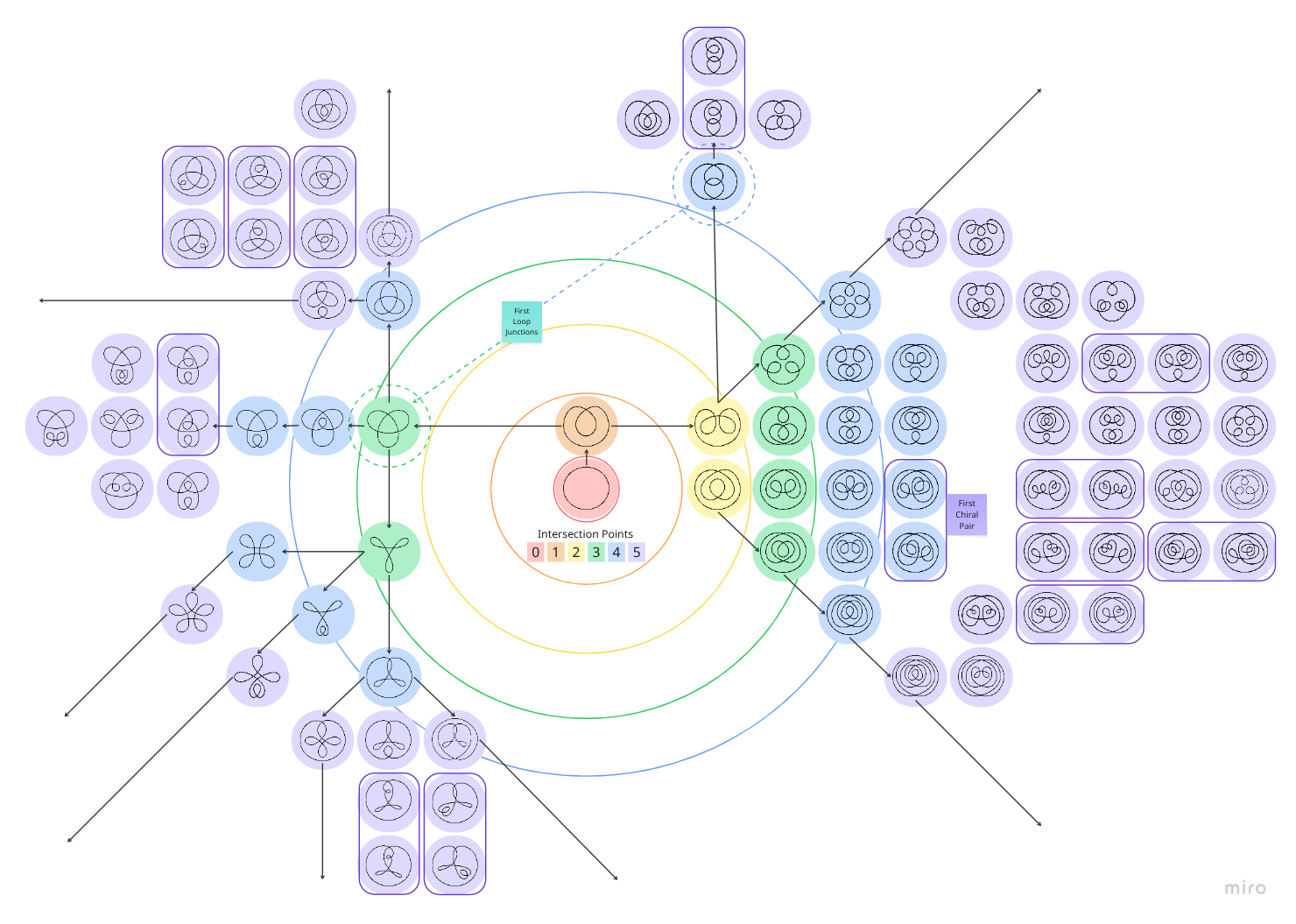
Weird stuff starts to happen pretty early on, but we’ll get to that.
Below is a second version of the first set, which is now privately held. I replace any that get sold, so as always to have the complete progression to date for exhibition purposes. (They can be purchased individually or in any combination for $144 per panel. Email me directly if interested.)
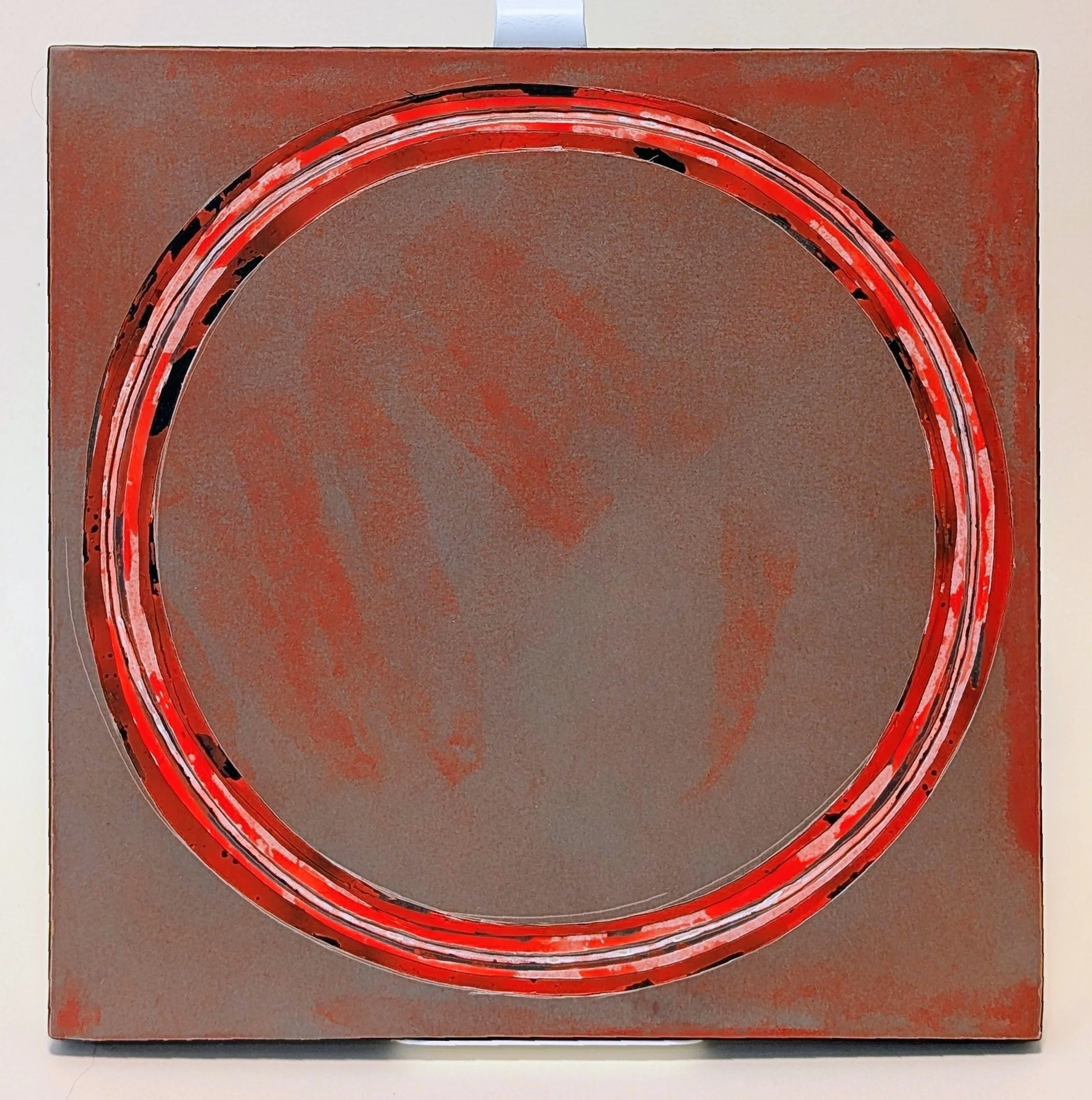
0-1 v2
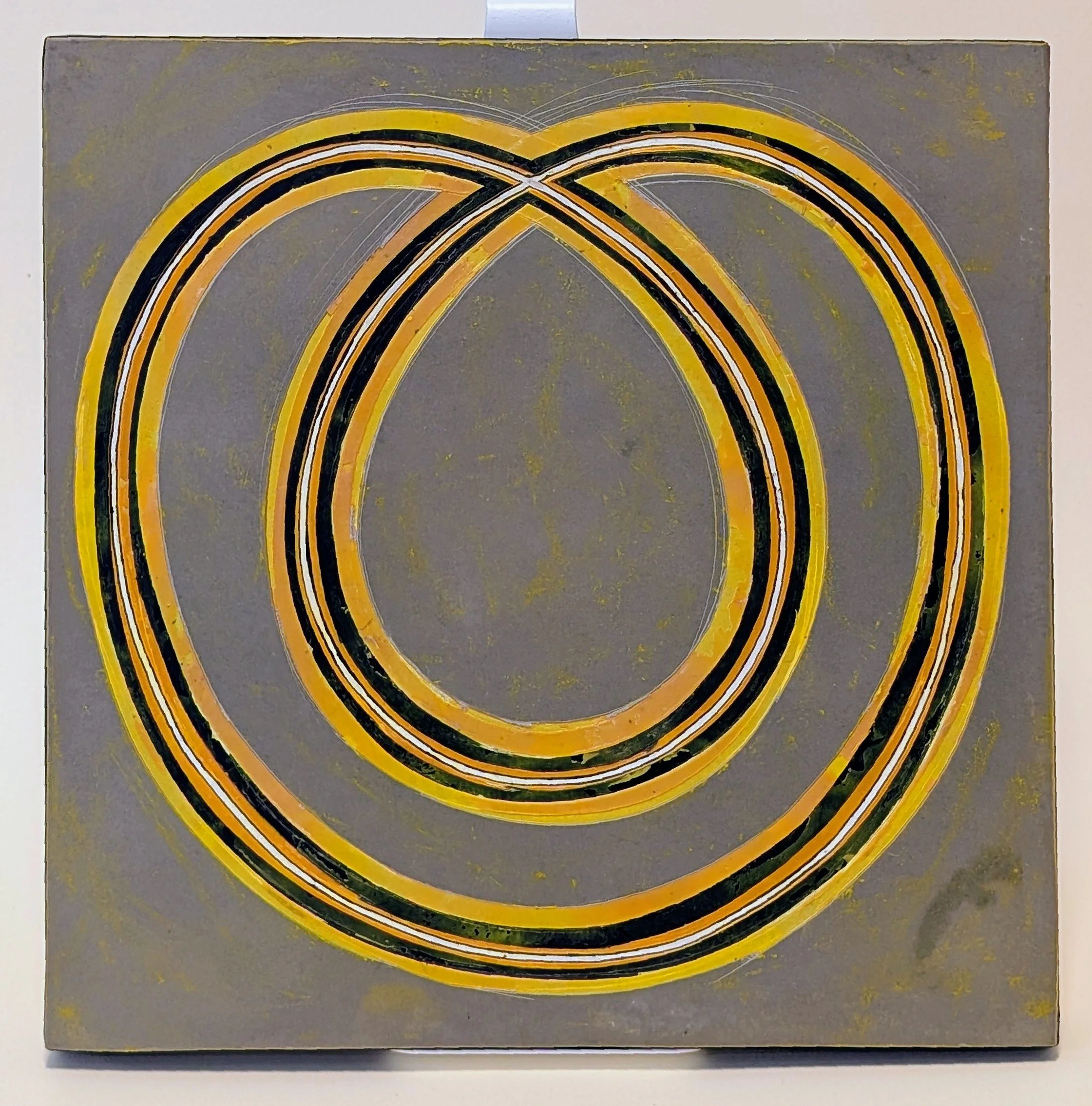
1-1 v2
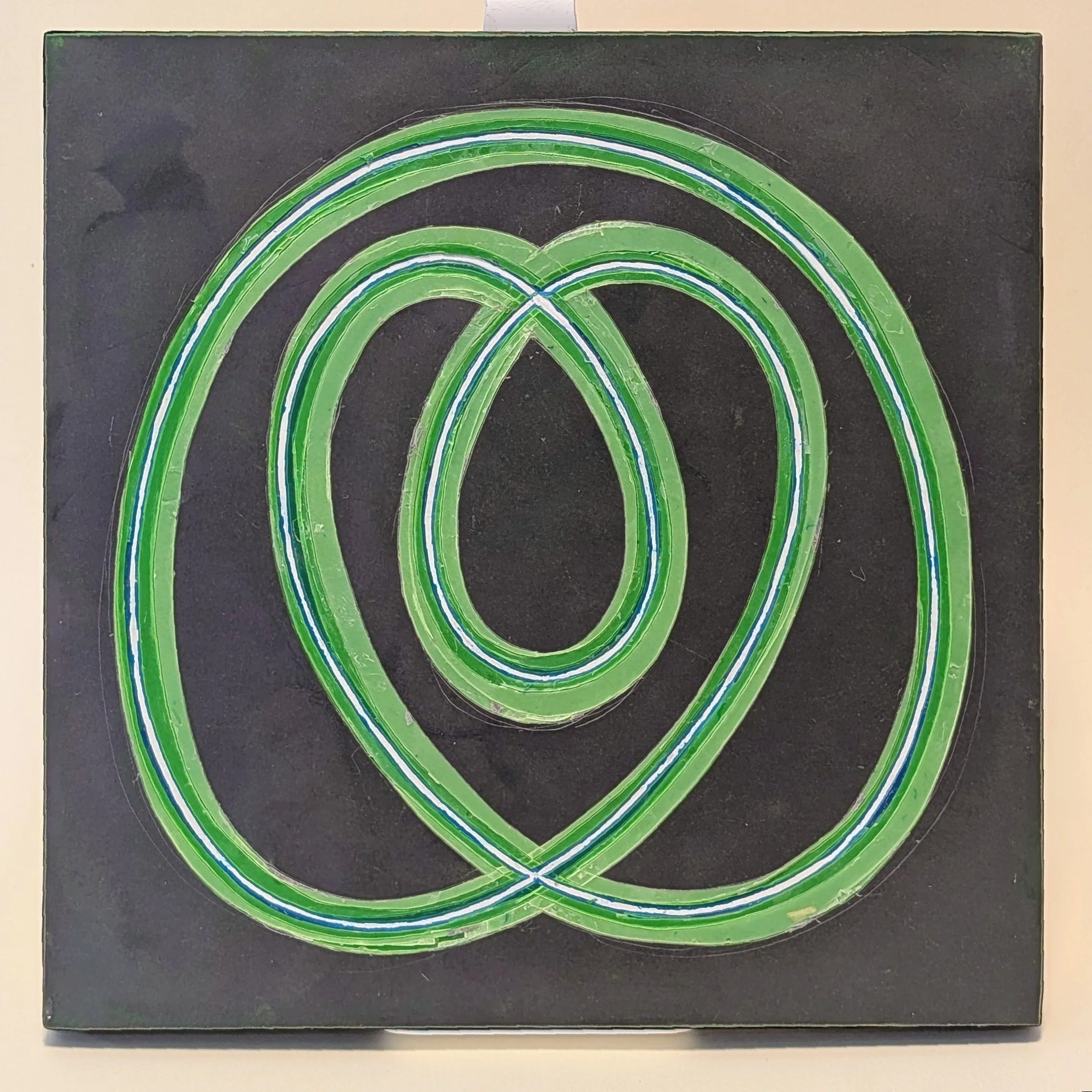
2-1 v2
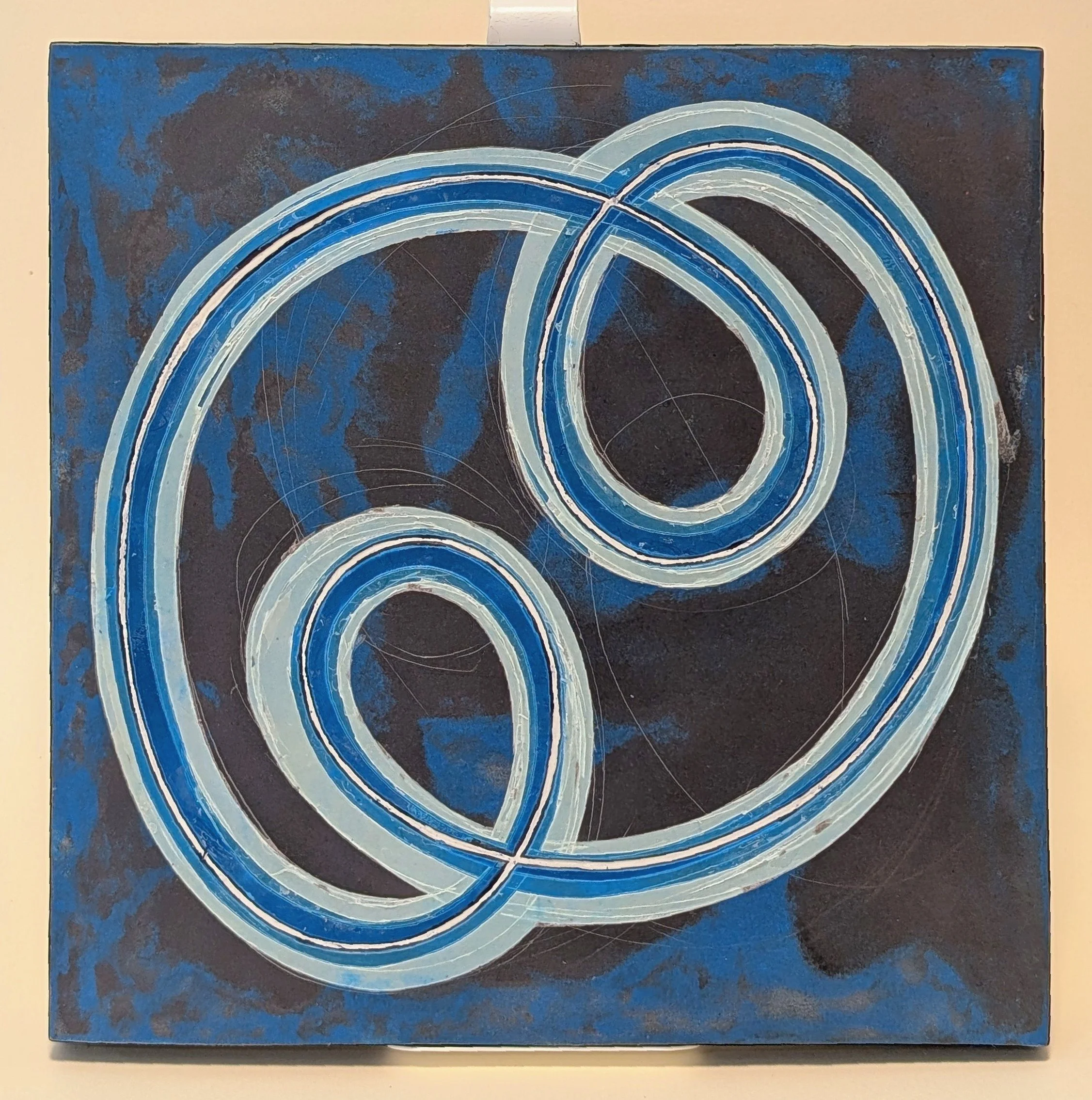
2-2 v2
What I do is select five sheets of cardstock, all different colors, and laminate them together on a birch panel using encaustic medium and a heat gun. Then I cut through the top layer to reveal the color beneath, and repeat, refining as I go, until I get to bedrock.
So the forms are excavated topographically rather than drawn or painted, the colors revealed like stratification in canyon walls.
These are the six (and only six) permutations with distinct isotopy for simple circle immersions with three intersections. The first four reflect a step progression from fully recursive nesting (“X” nesting levels with one loop each) to fully lateral nesting (“X” loops grouped together in one nesting level), while the last two basically flip things inside out. The resulting forms factors are so different that I’m finding it hard to come up with a common notation strategy for identifying any given circle immersion within the full set.
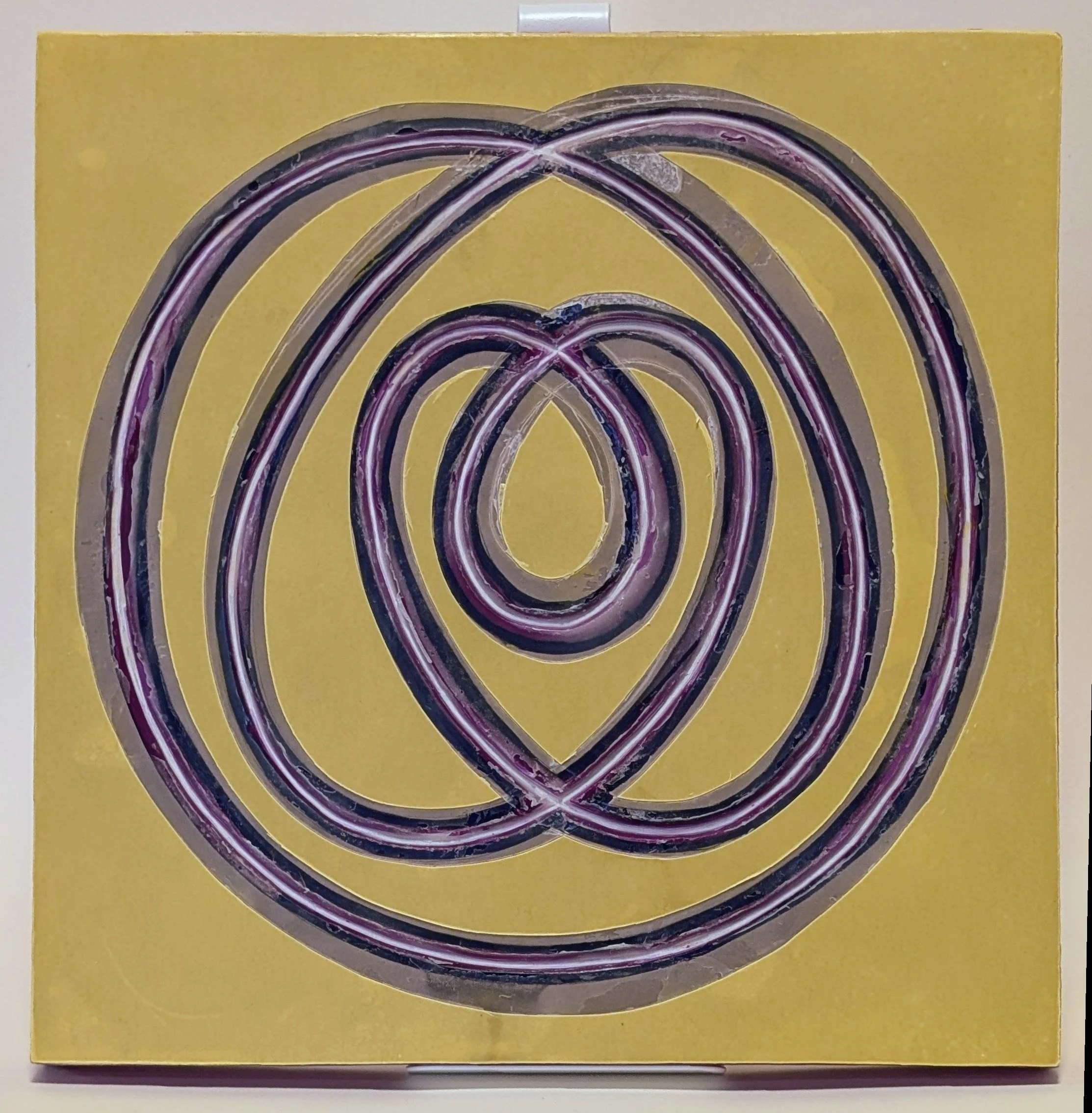
3-1 recursive nesting (1,1,1)
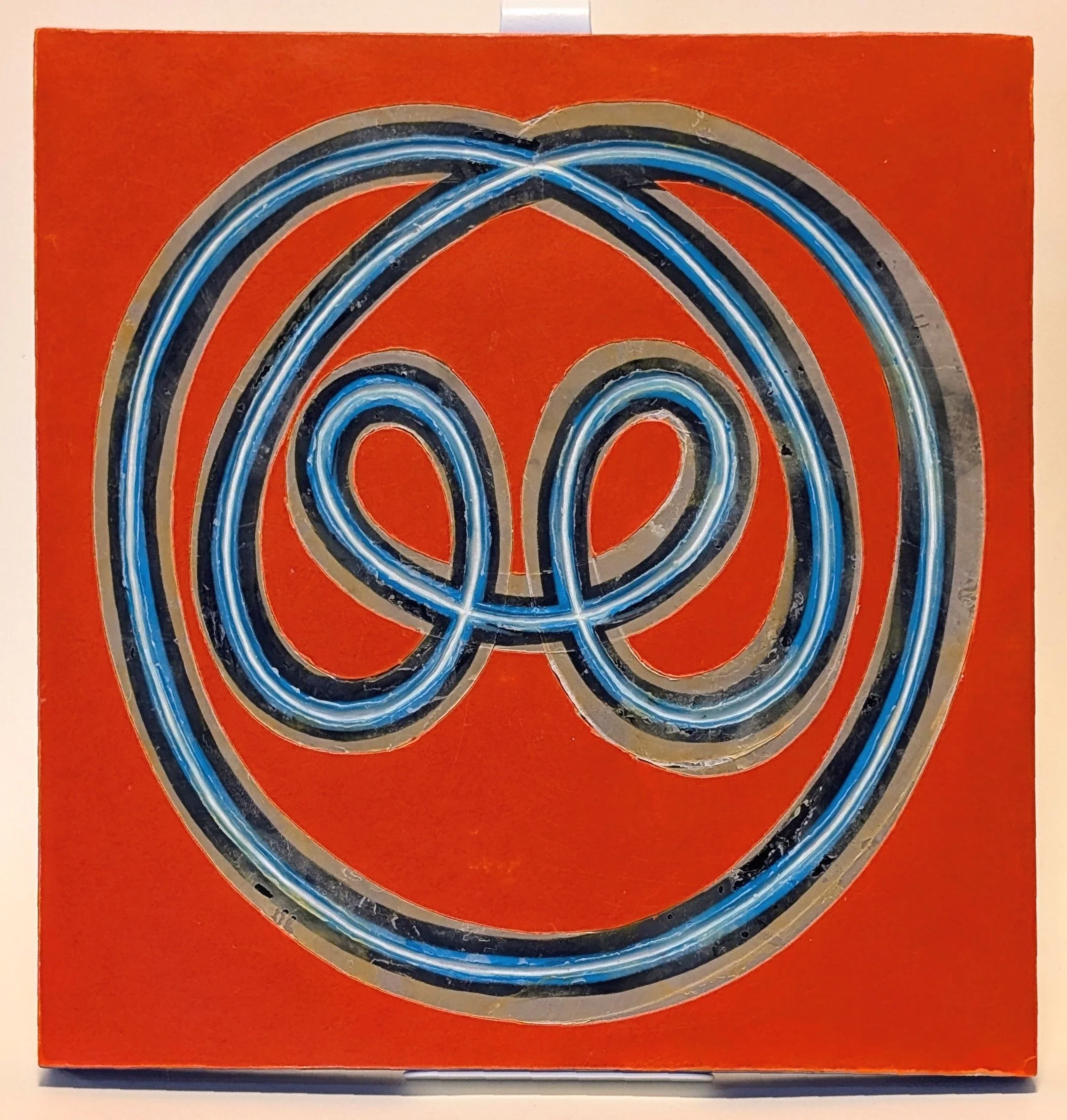
3-2 incremental nesting (1,2,0)
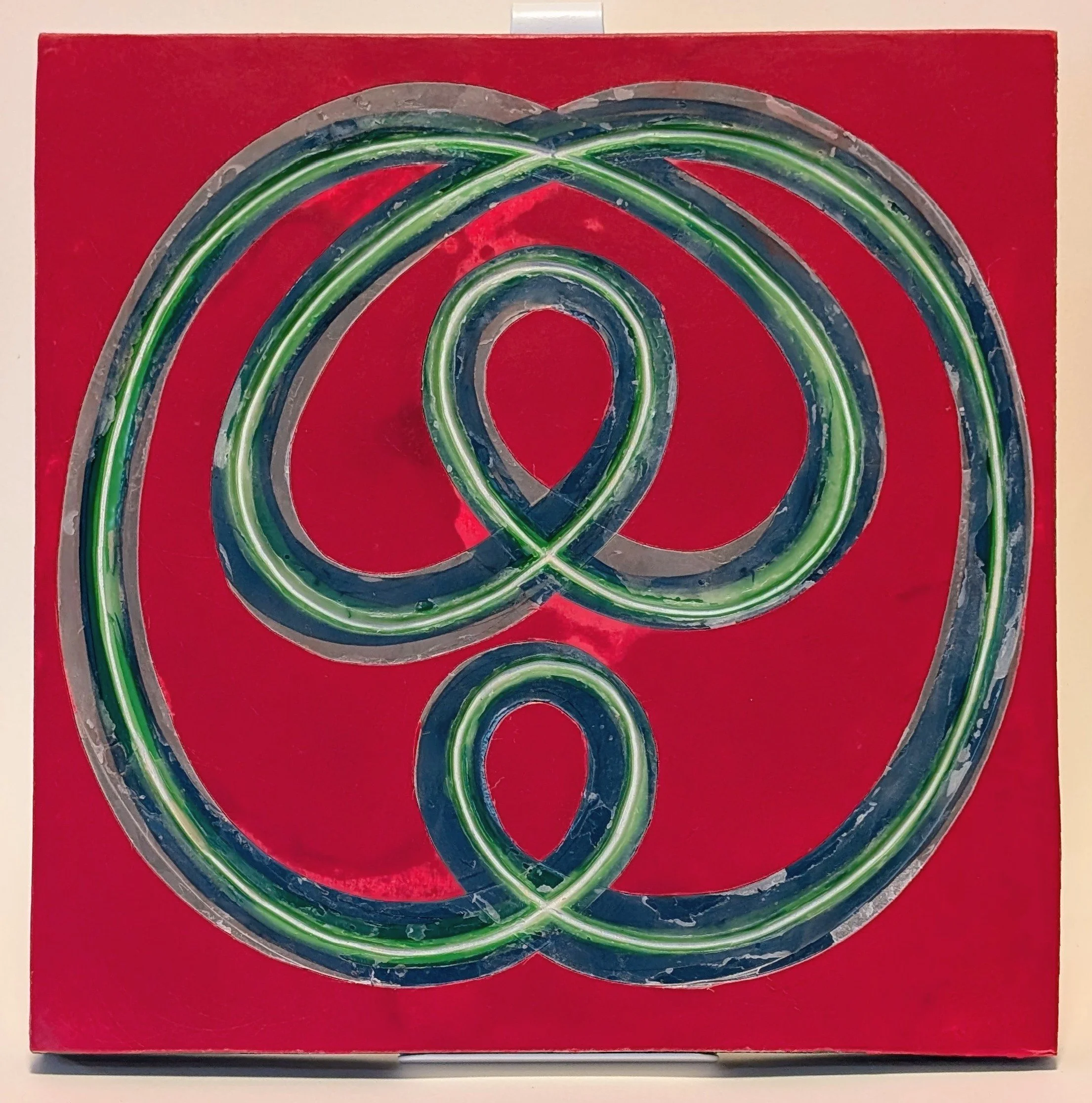
3-3 incremental nesting (2,1,0)
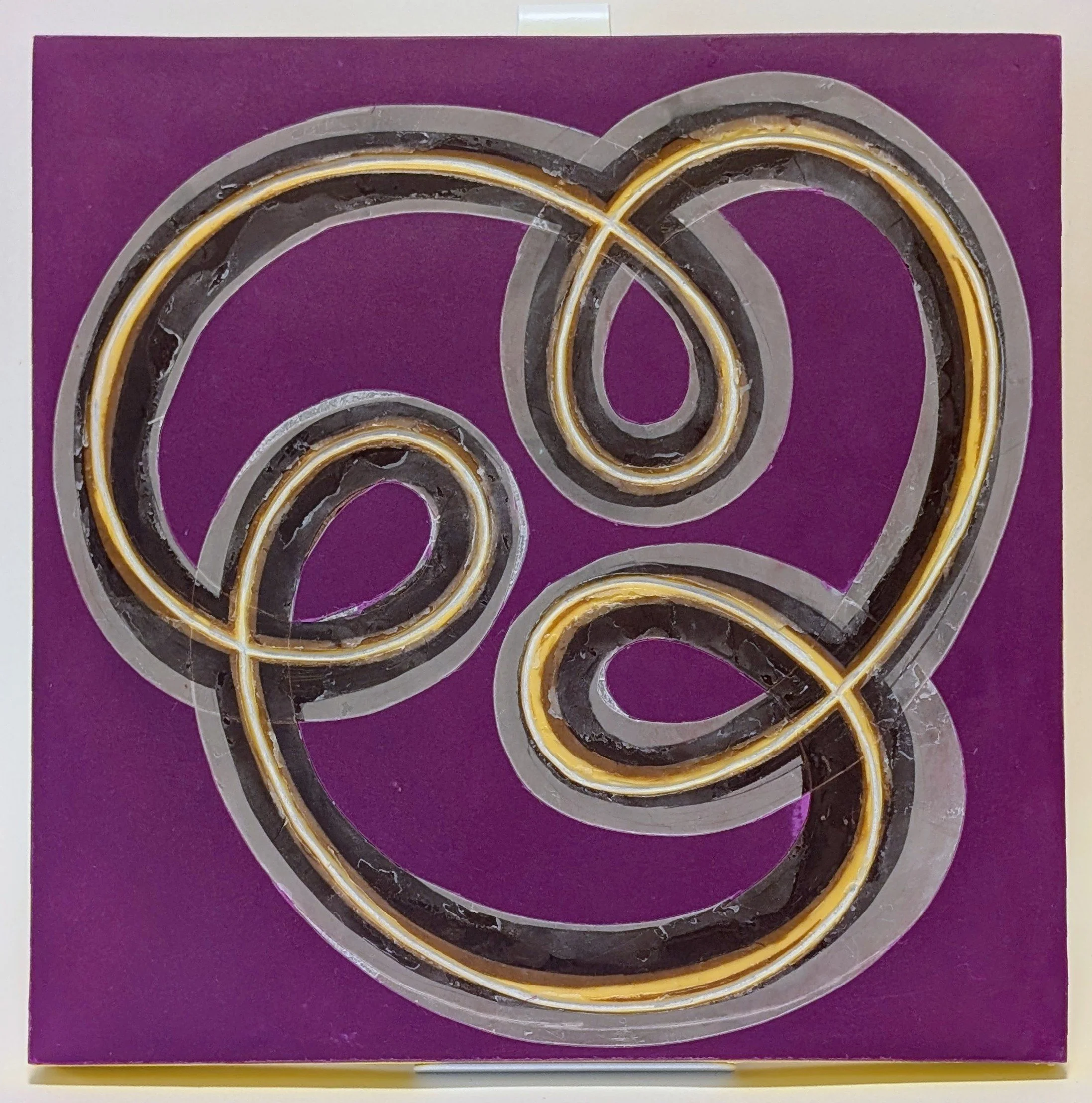
3-4 lateral nesting (3,0,0)
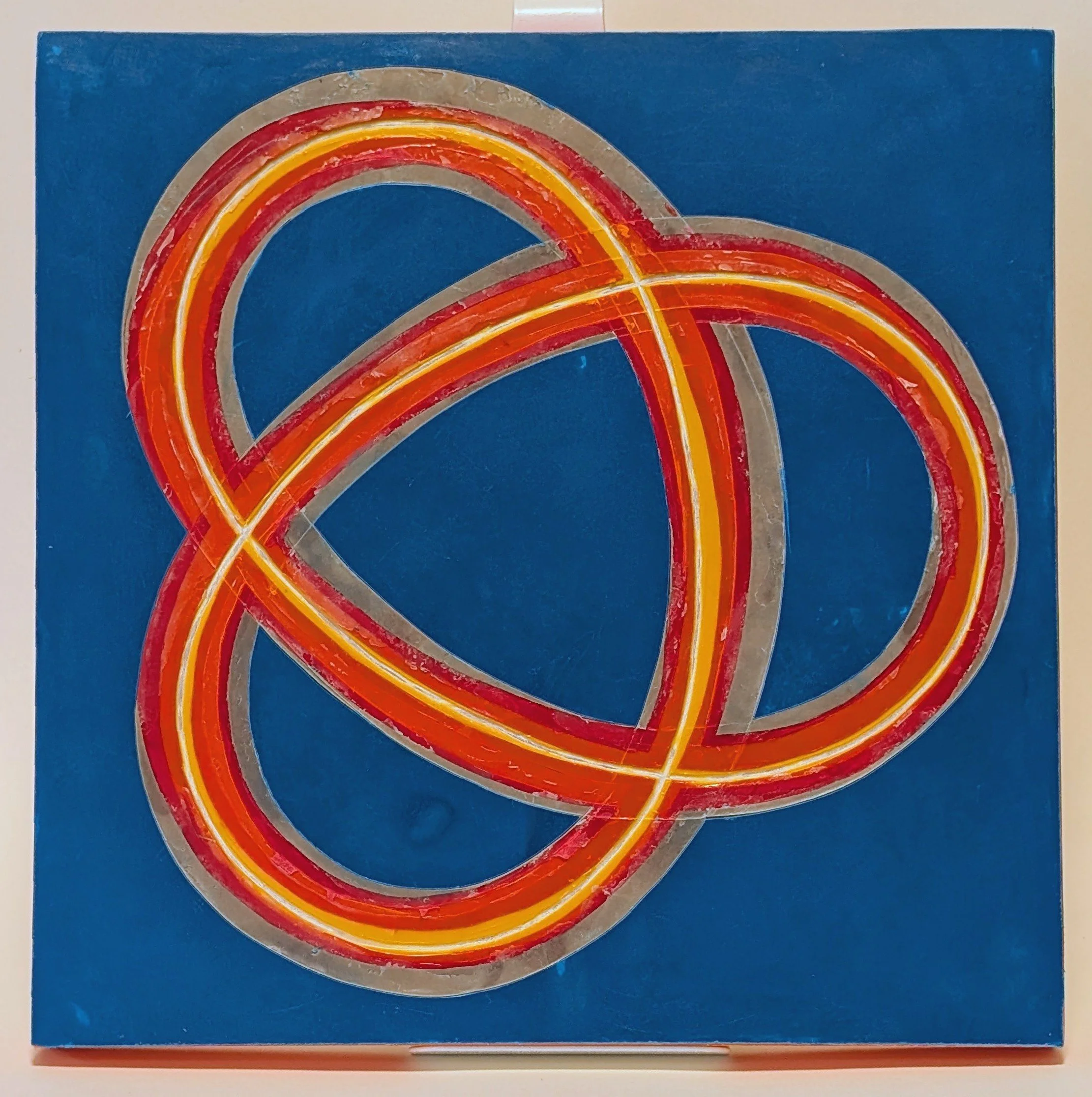
3-5 reciprocal nesting (?)
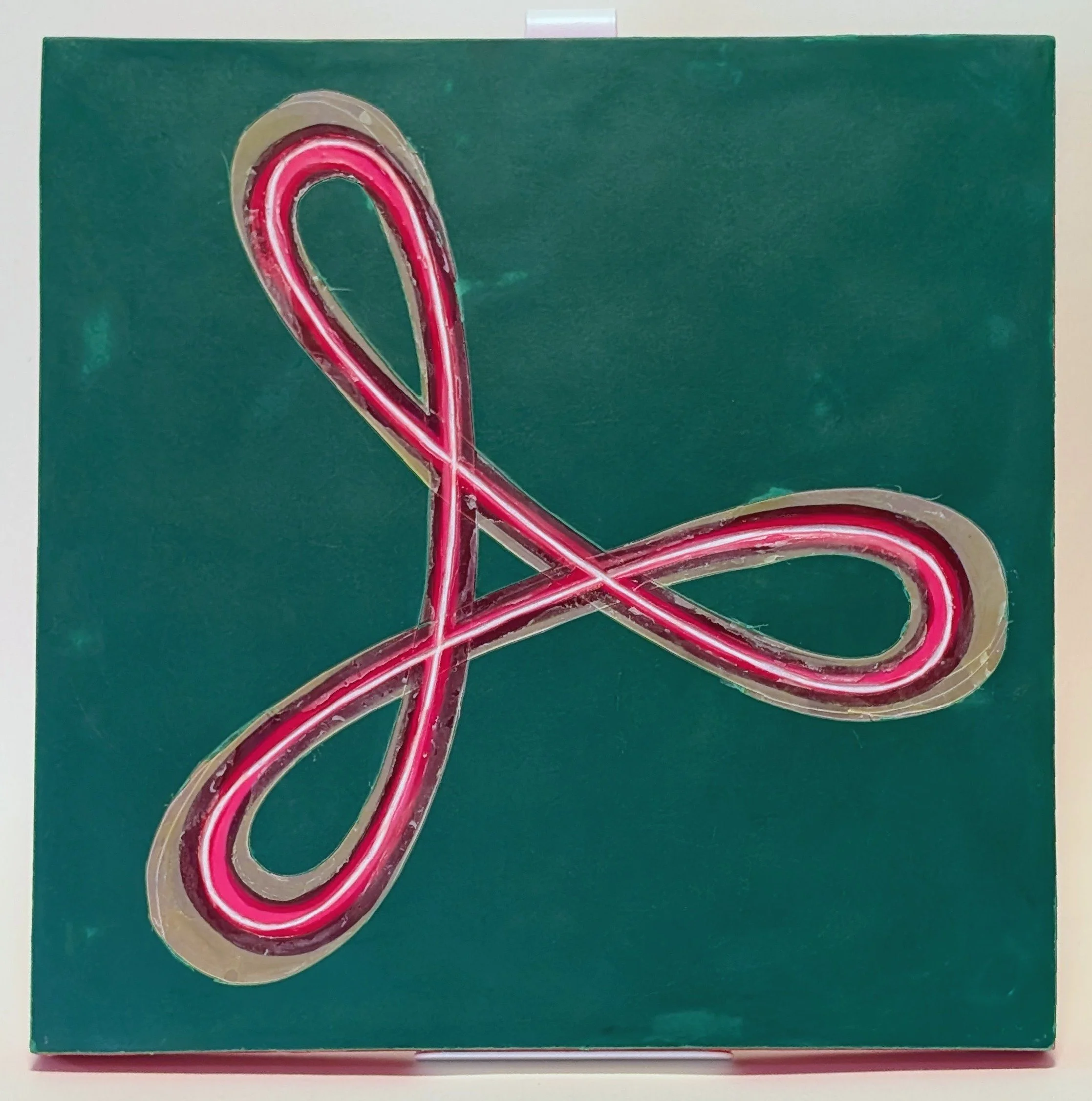
3-6 extruded (?)
They all have three intersections, and four regions. But do they all have four rotations? The first four certainly do, but the last two sure don’t look like it. Something about those concave and convex arc polygons at their centers suggest a sleight-of-hand rotation somehow. An additional rotation assembled from parts.
I’m doing something not at all subtle with color. Primaries and secondaries. Complements. Low entropy at the outset. It will increase.
Below this text block are sixteen of the seventeen (and only seventeen) permutations with distinct isotopy for simple circle immersions with four intersections. I managed to fail to get a photo of “4-1 v2” before the set was acquired as a whole (affording me the opportunity to play with some equivalent isotopy variations as shown at the top of this page) and no longer in my hands, but at this point, you can pretty easily imagine what the fourth generation fully nested, highest symmetry configuration looks like. Colorwise, imagine avocado starting to oxidize, channelling a lazy river of balsamic.
Seventeen strikes me as a weird number in this context, but that’s how many there are. Same number as the Standard Model’s list of fundamental particle types, but best not to read anything into that, though it seems like a weird number there too.
Still working on a good notation schema for the series, but every time I think I’ve solved it, I encounter a new situation that I haven’t accounted for. For now, I am just numbering them for reference, starting from the most deeply nested and moving incrementally outward from there.
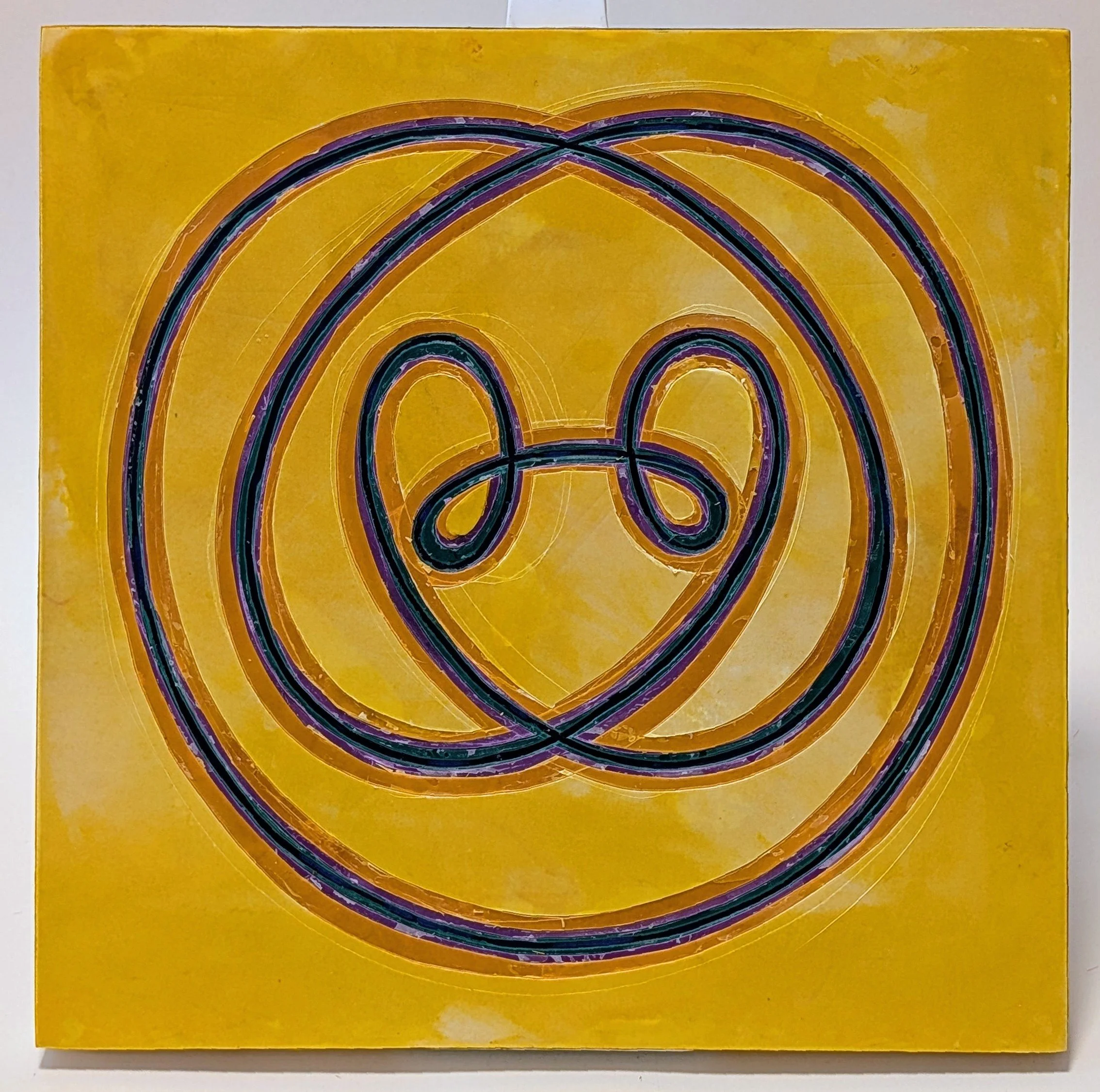
4-2 v2
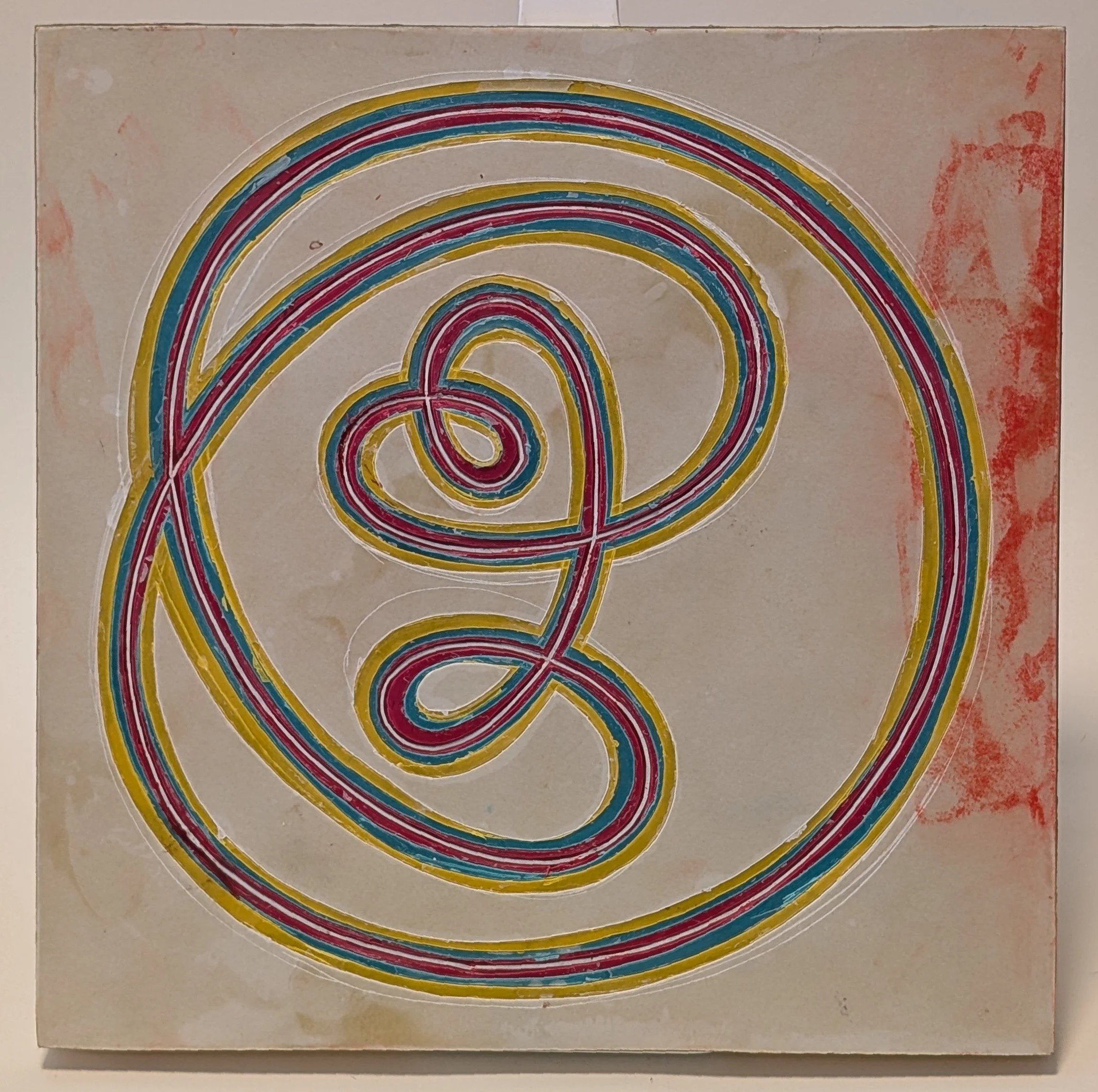
4-3 v2
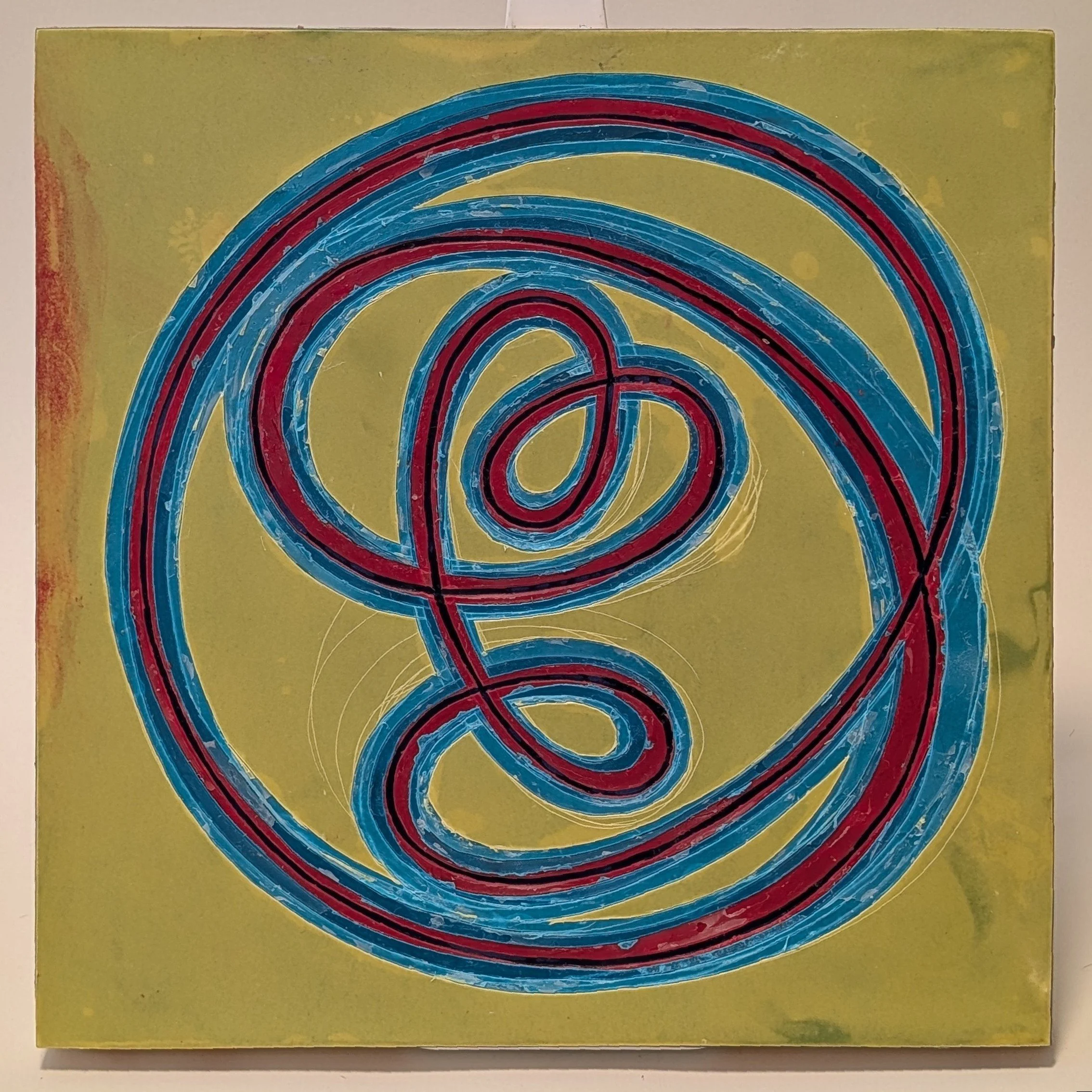
4-4 v2
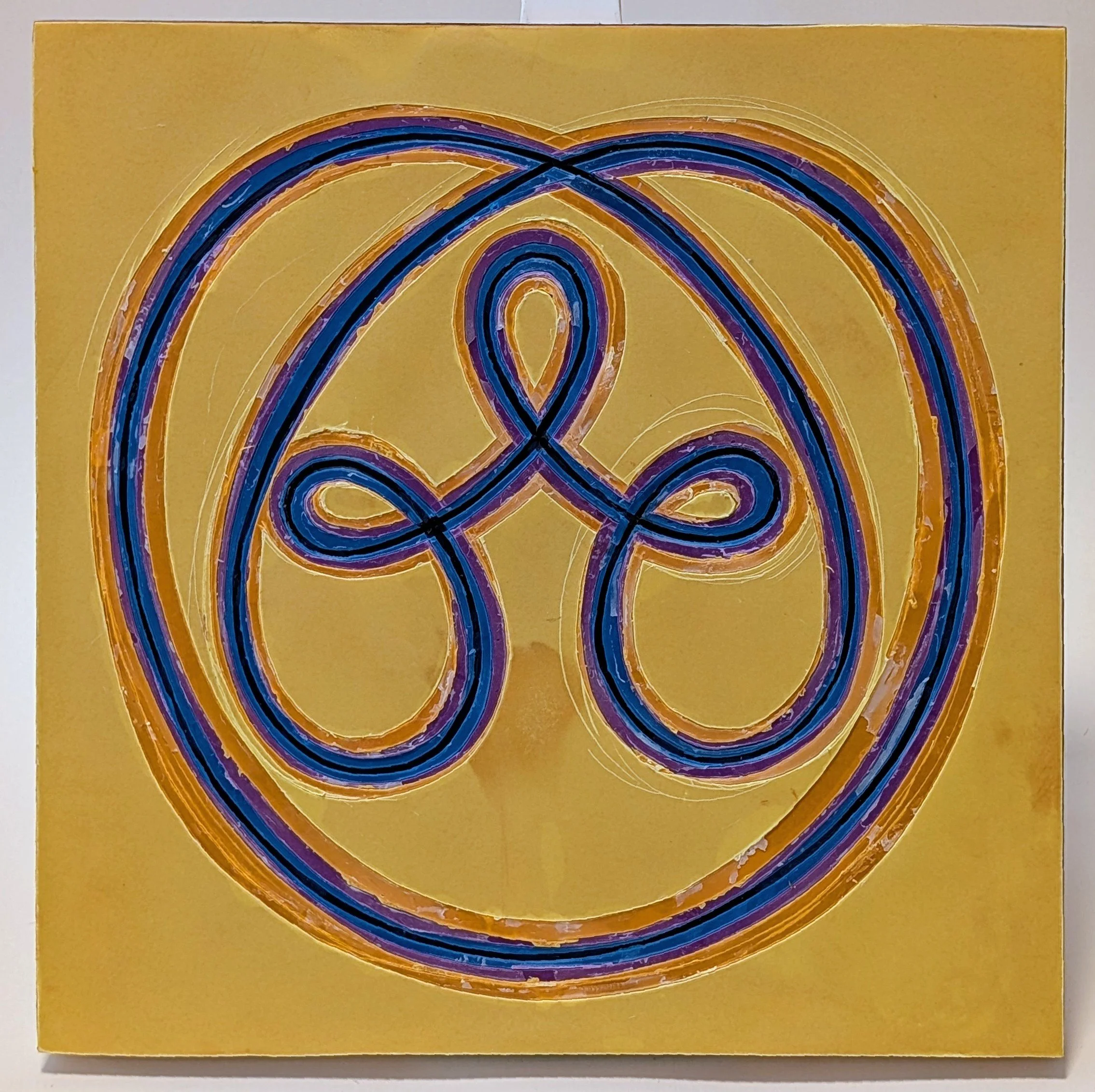
4-5 v2
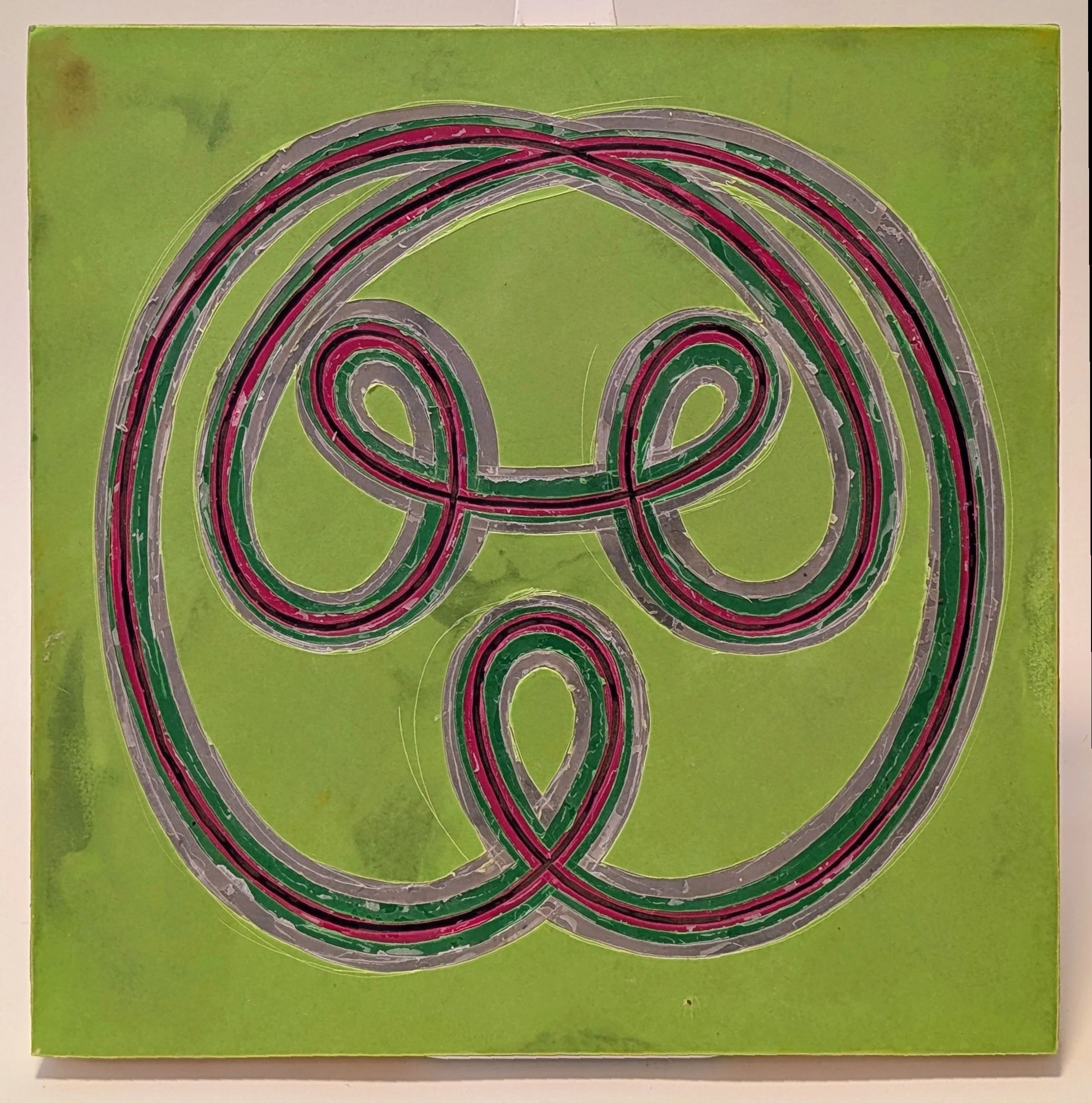
4-6 v2
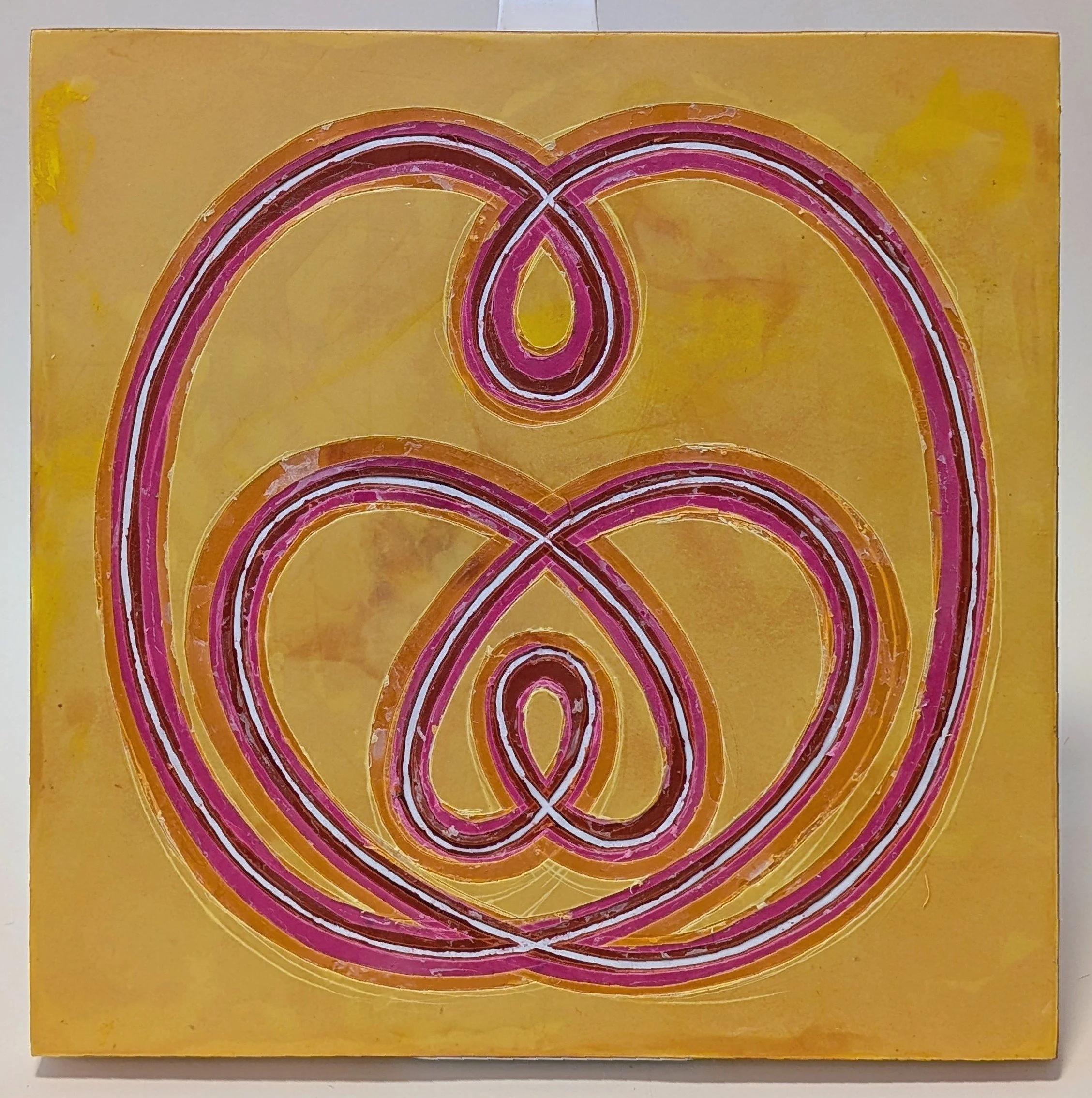
4-7 v2
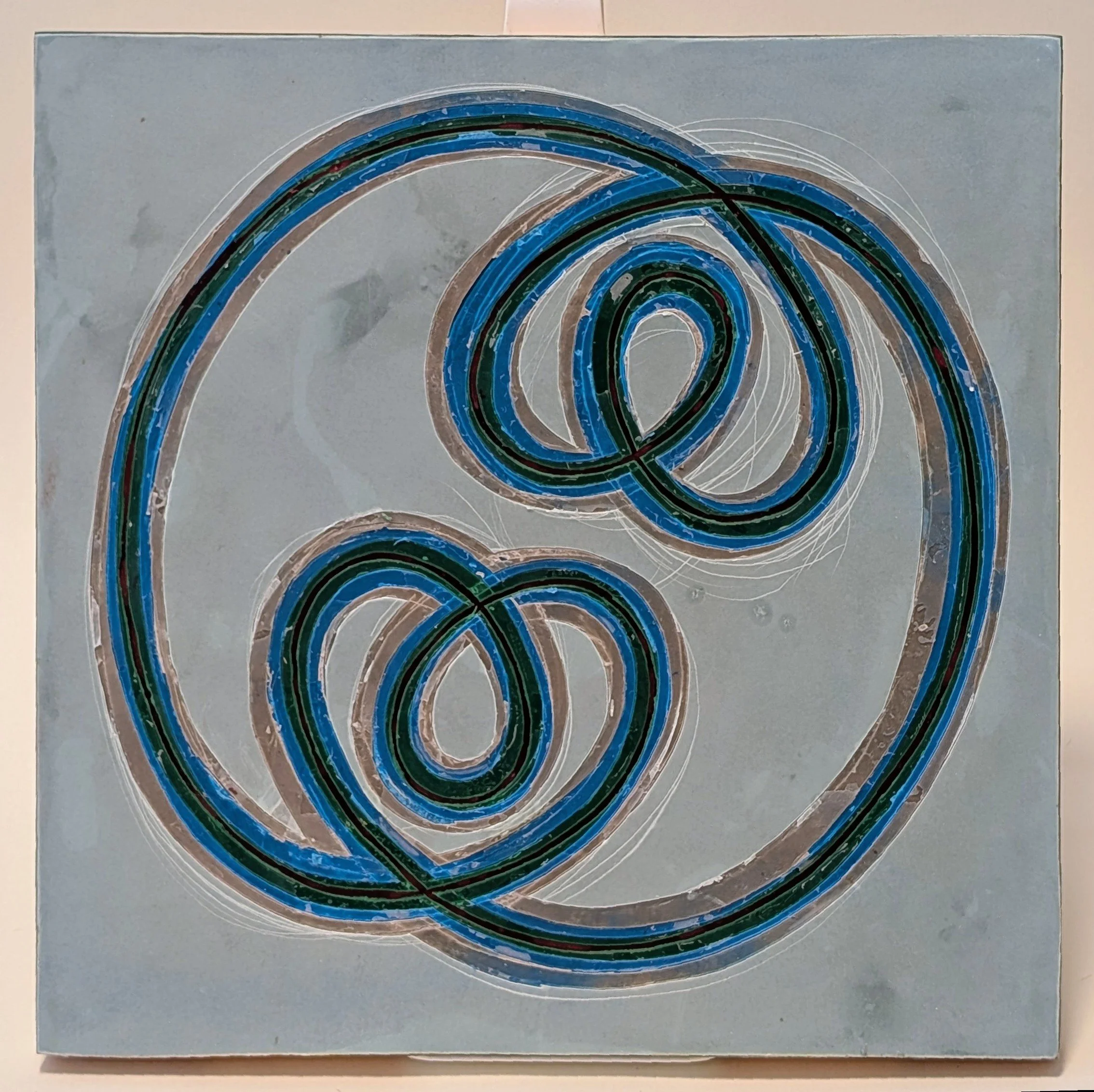
4-8 v2
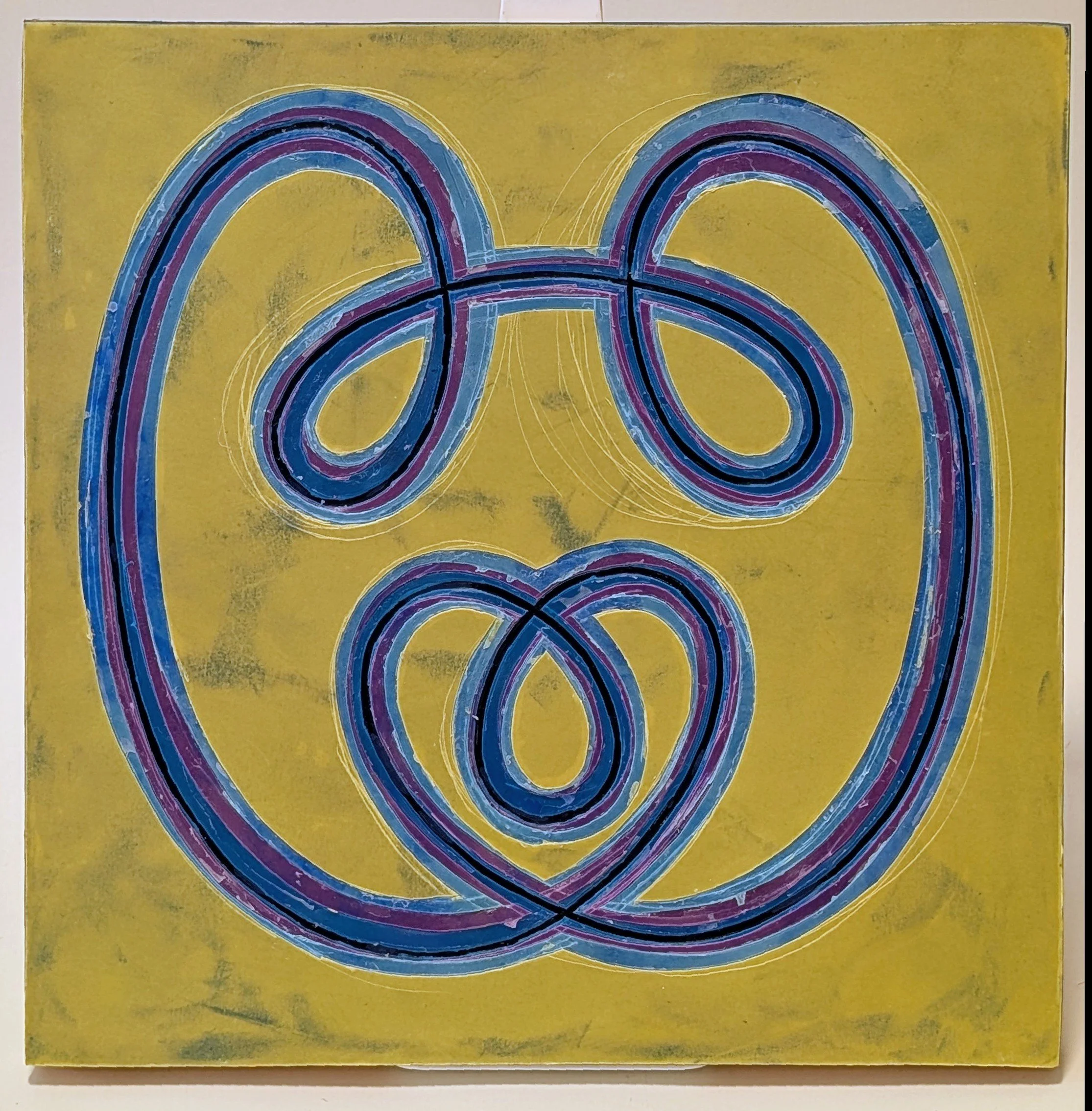
4-9 v2
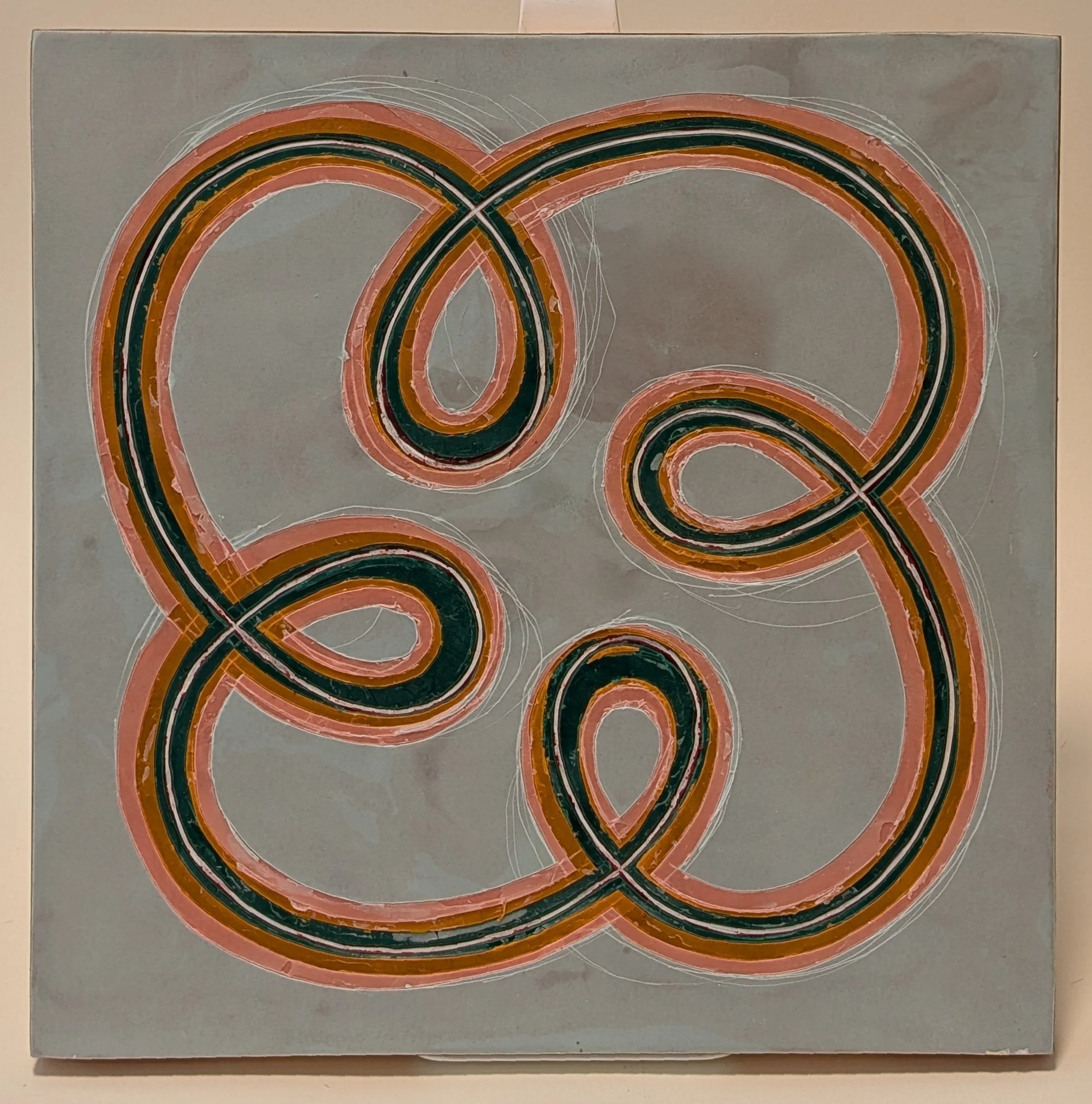
4-10 v2
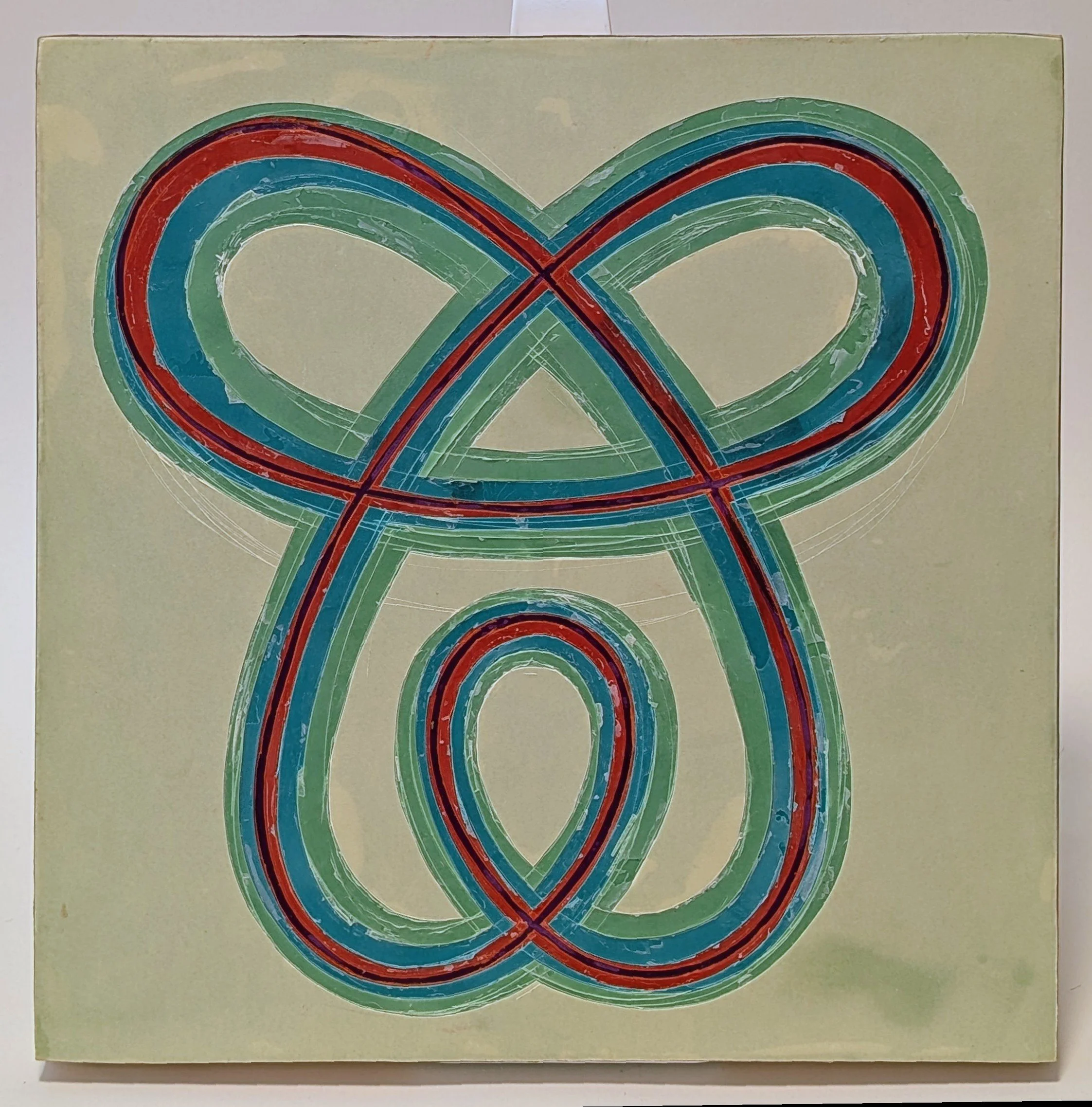
4-11 v2
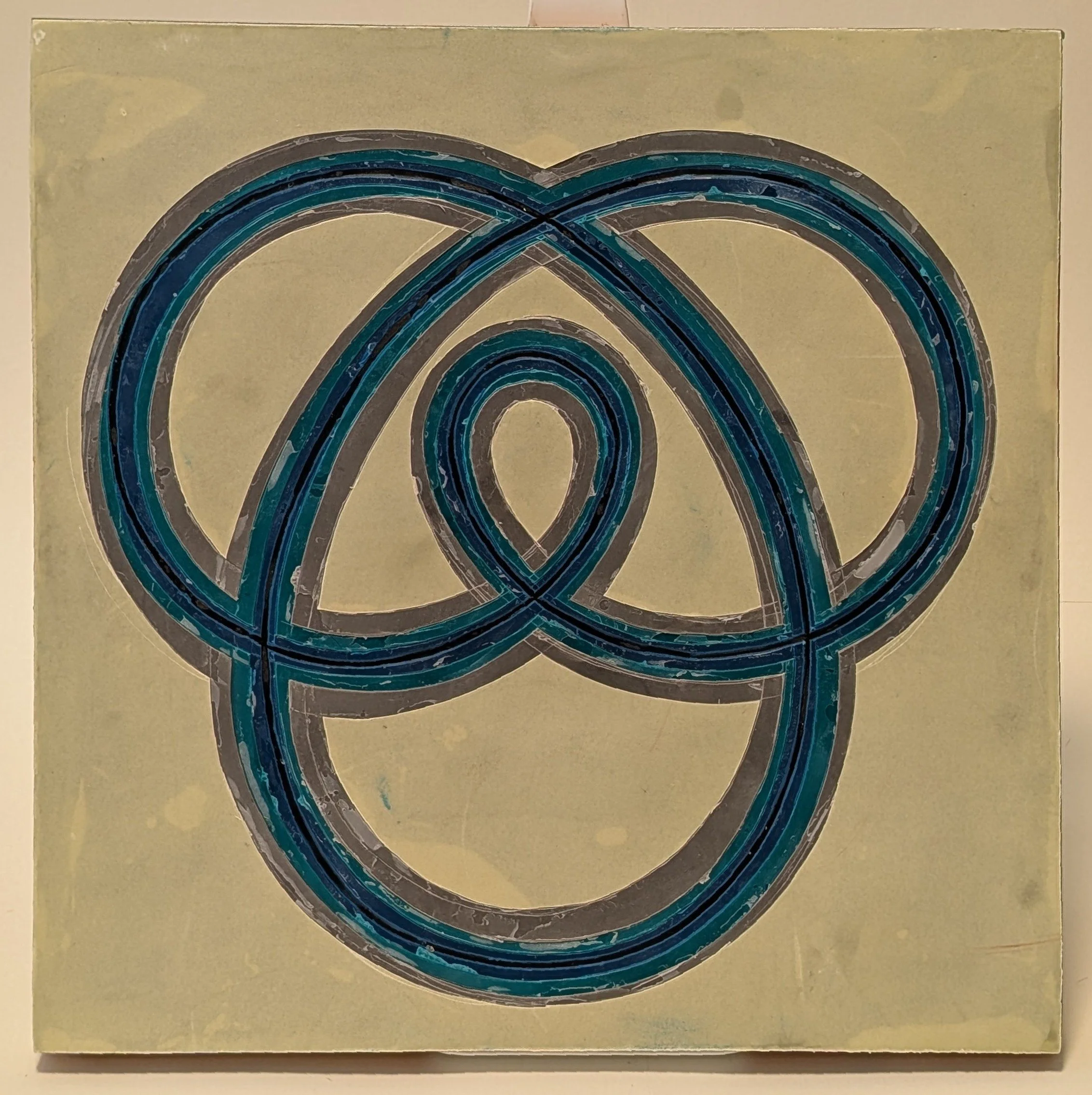
4-12 v2
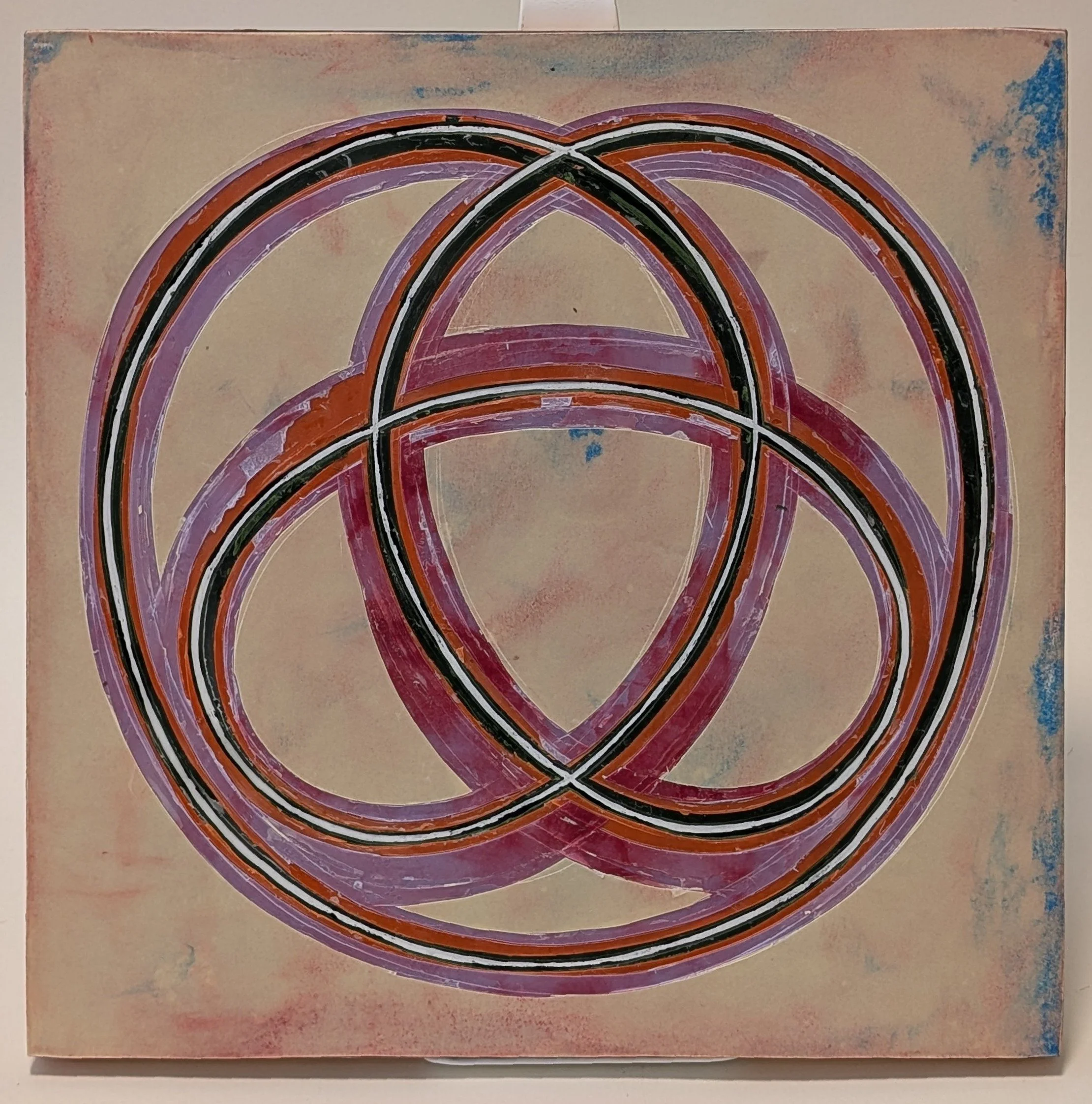
4-13 v2
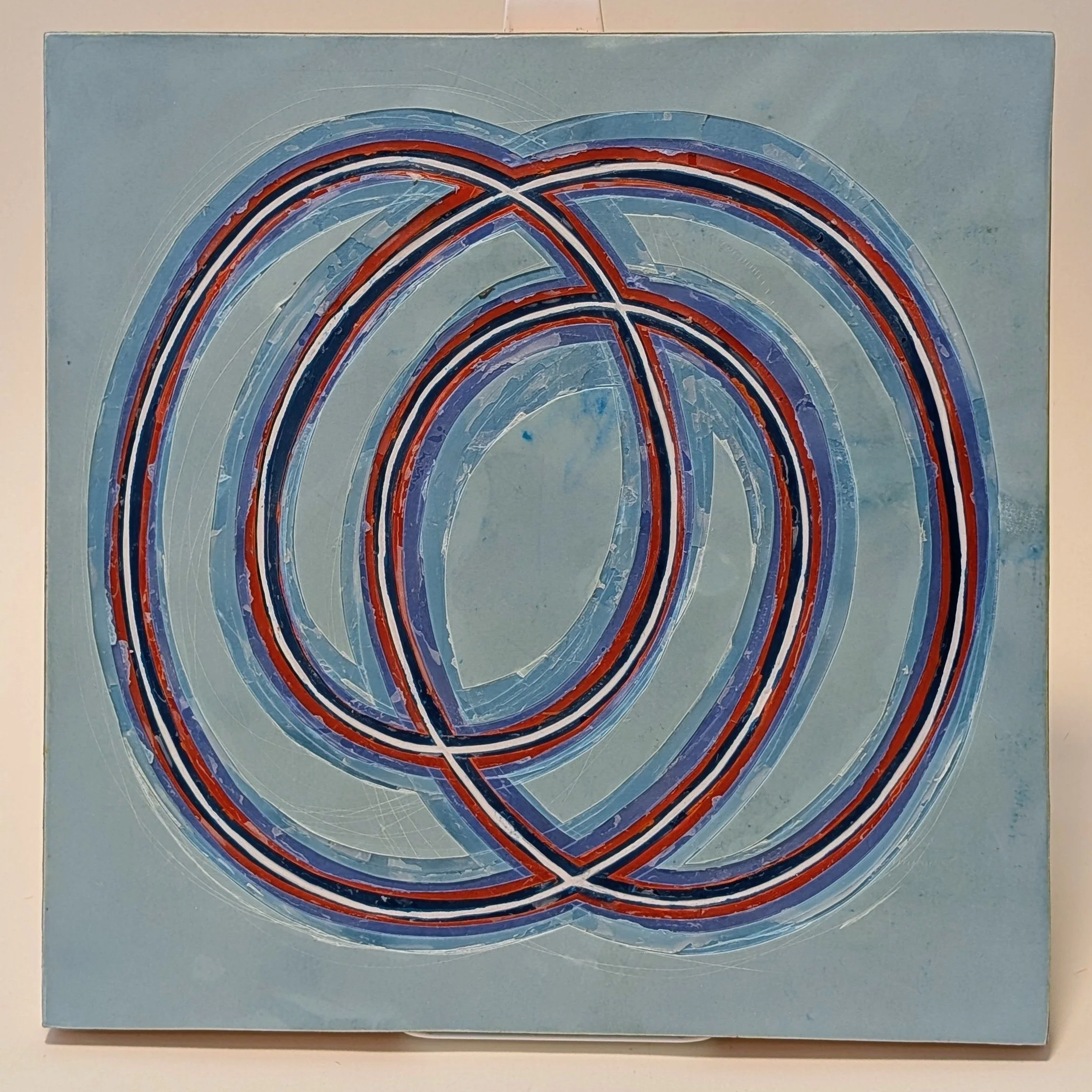
4-14 v2
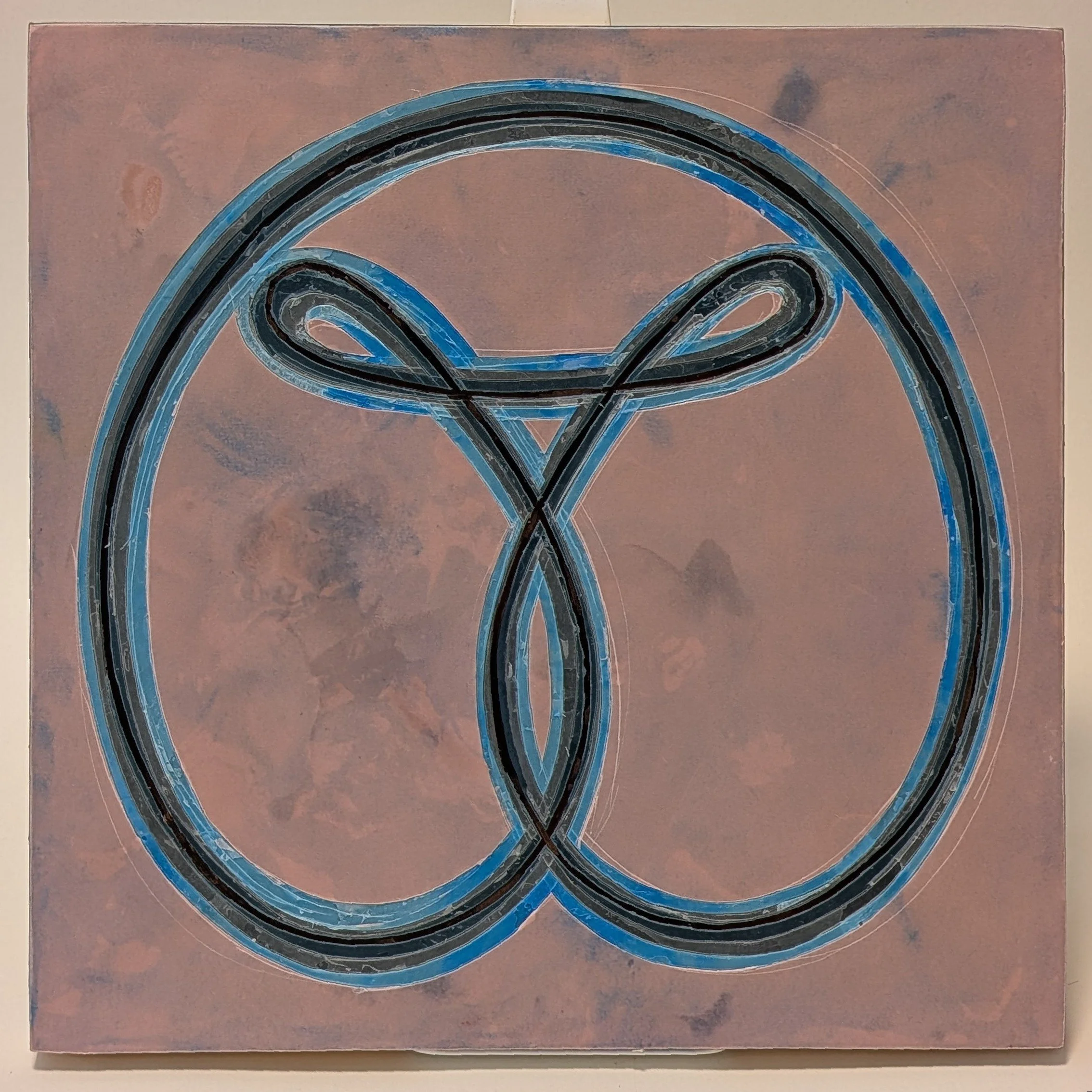
4-15 v2
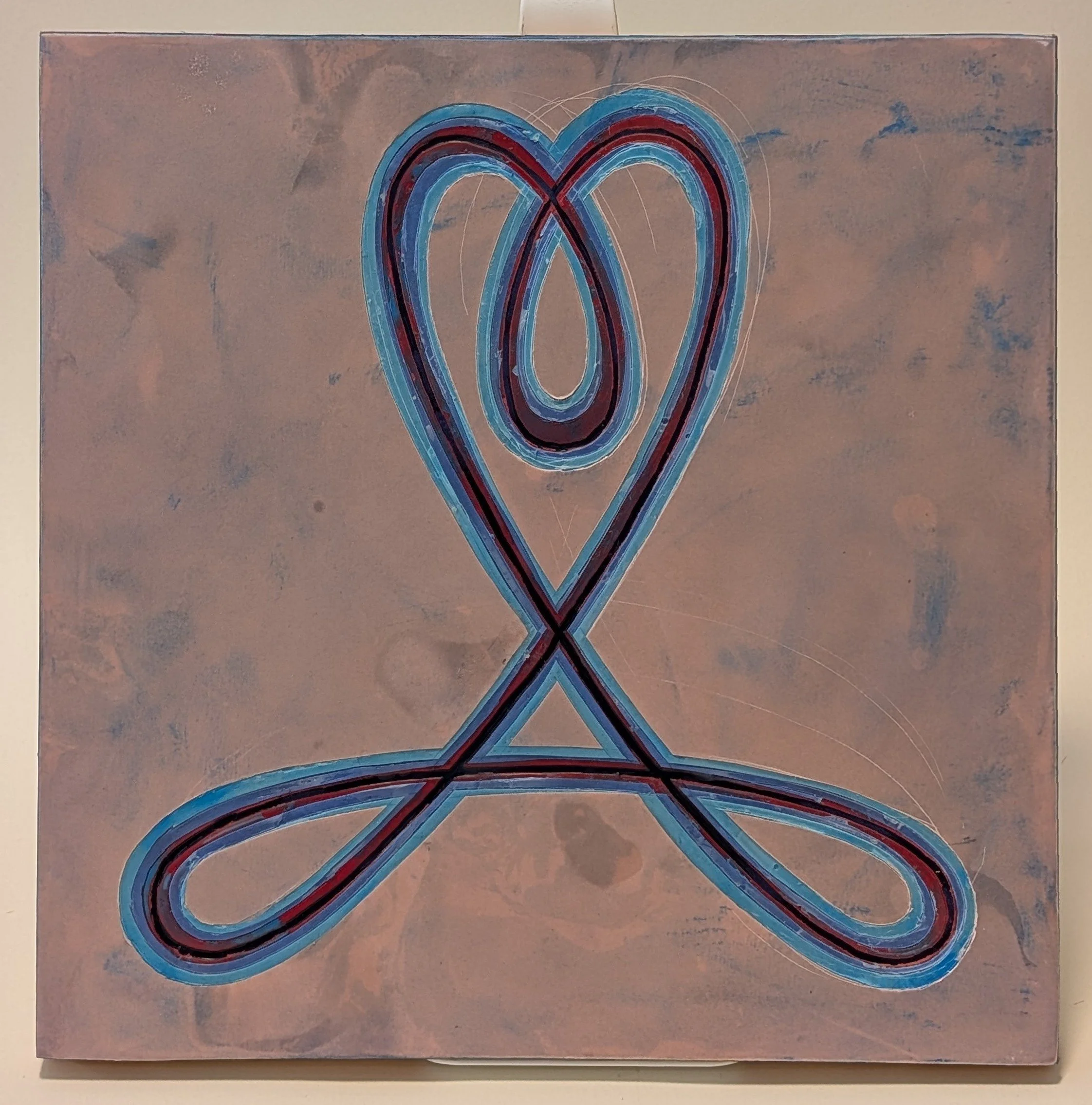
4-16 v2
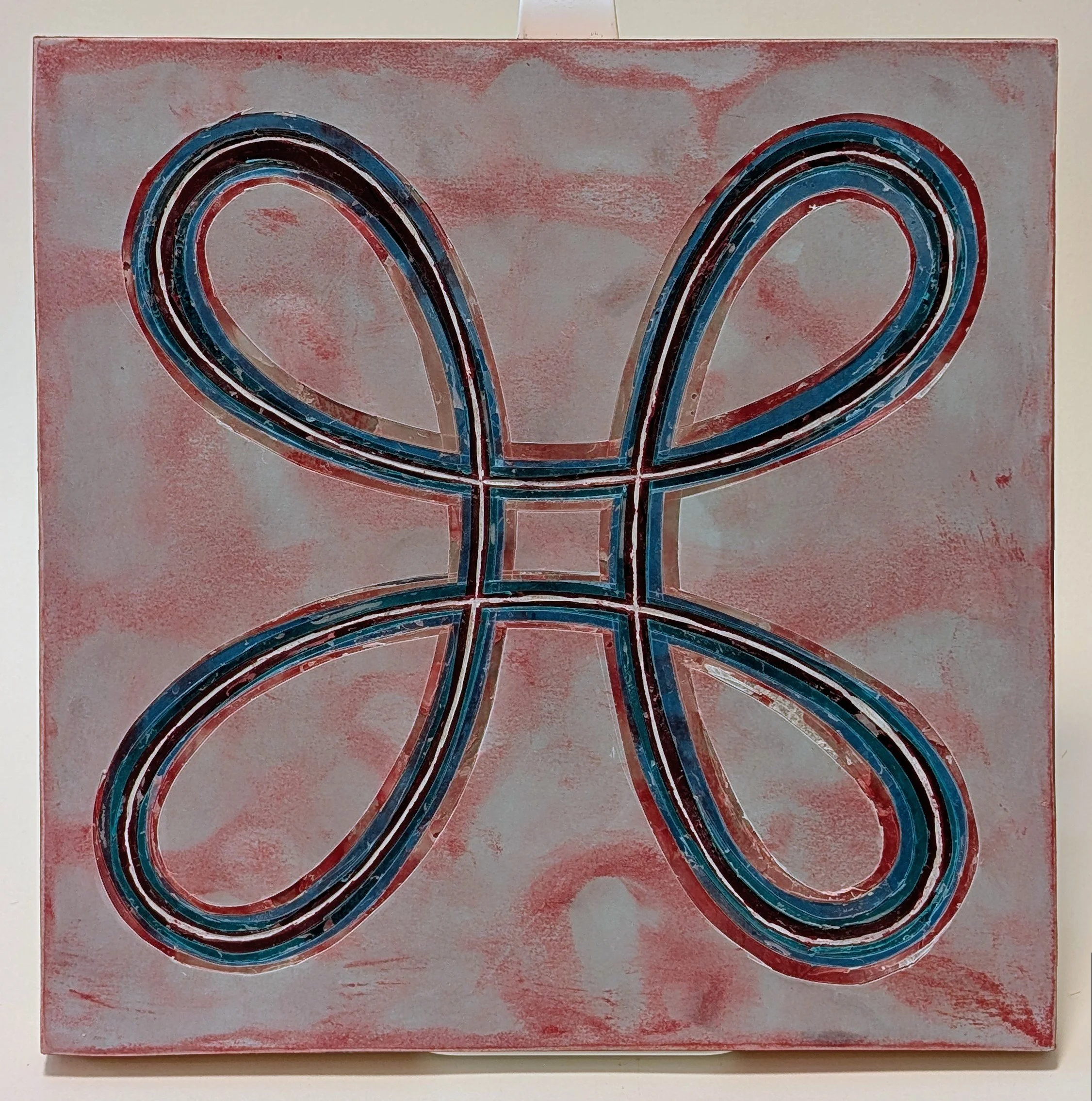
4-17
The integer sequence for the emergent permutation count starts with 1,1,2,6,17. I am pretty confident the next number is 56. The Online Encyclopedia of Integer Sequences (OEIS) does not list a sequence that starts with 1,1,2,6,17,56, so either I’ve made a mistake somewhere, or we’re in new territory. And pretty fundamental territory at that. Exciting.
Well, I’M excited.